It began with a legal question. Before making anything, Chidi Nwaubani consulted a lawyer to ask whether a digital form of the Rosetta Stone, held in the British Museum since it was taken from Egypt, was even possible to make.
The answer set the concept. Reusing the museum's photograph would be illegal, because the museum owns the image, but its own terms permit 3D scans. A legal investigation became the artwork's method.
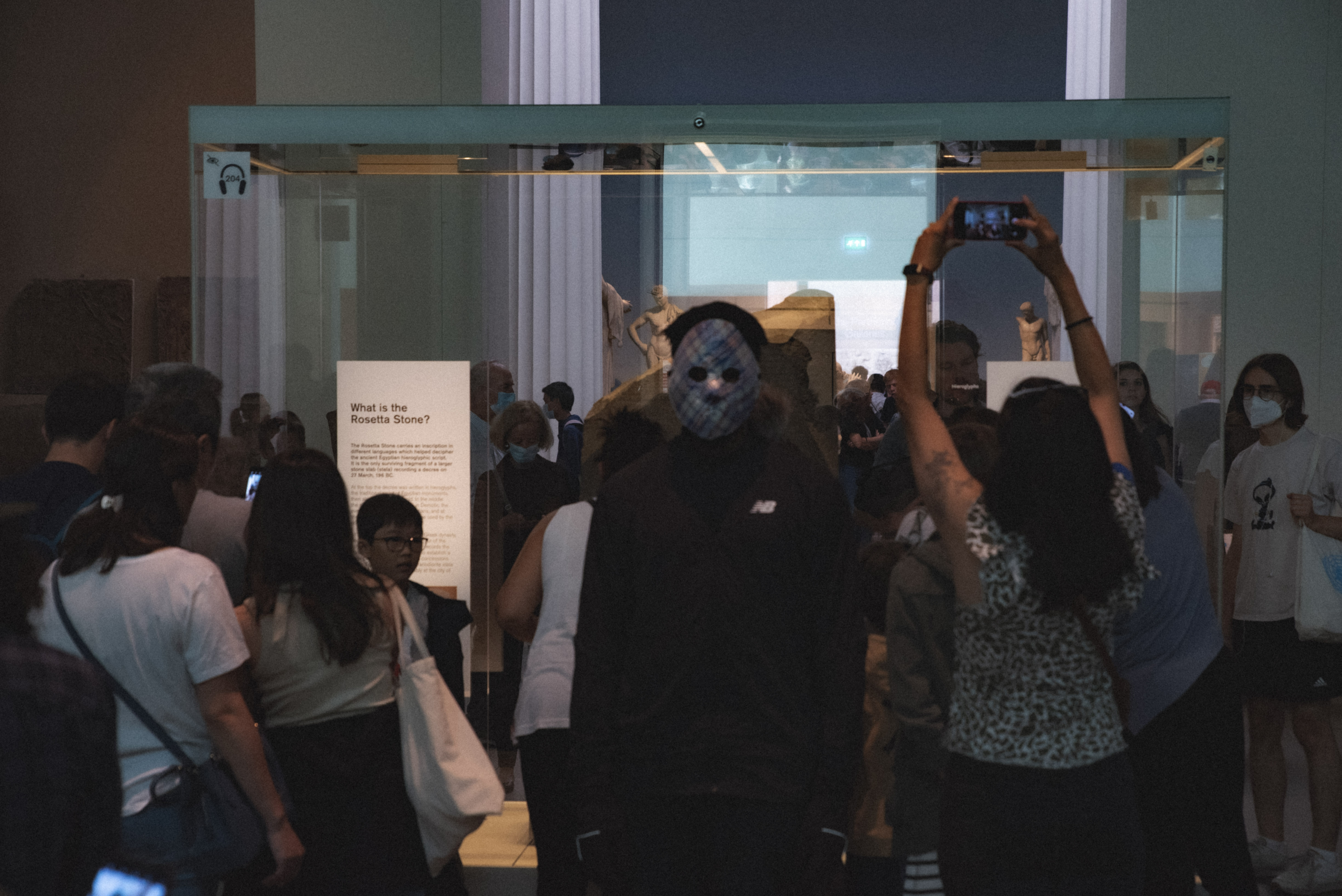
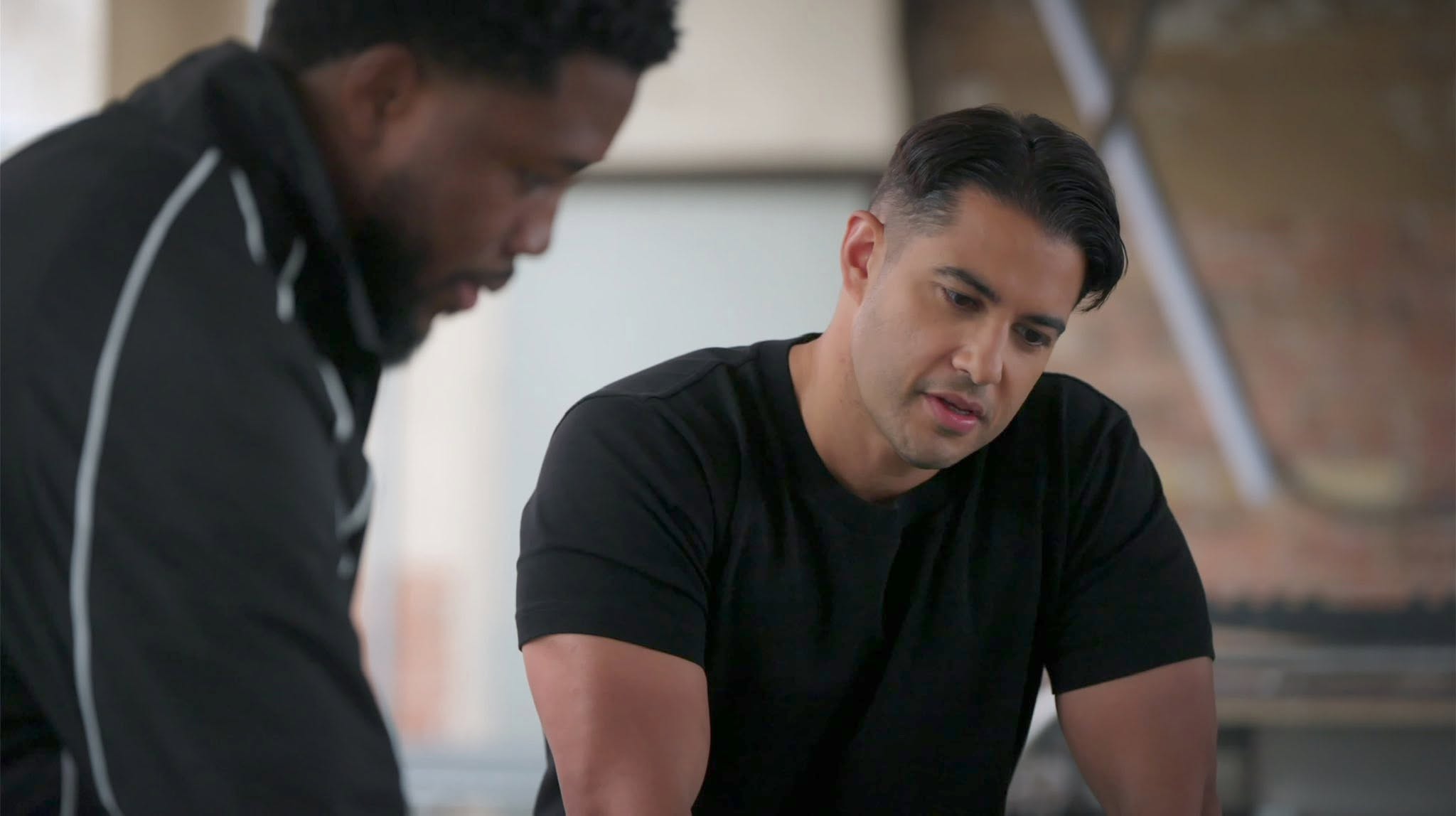
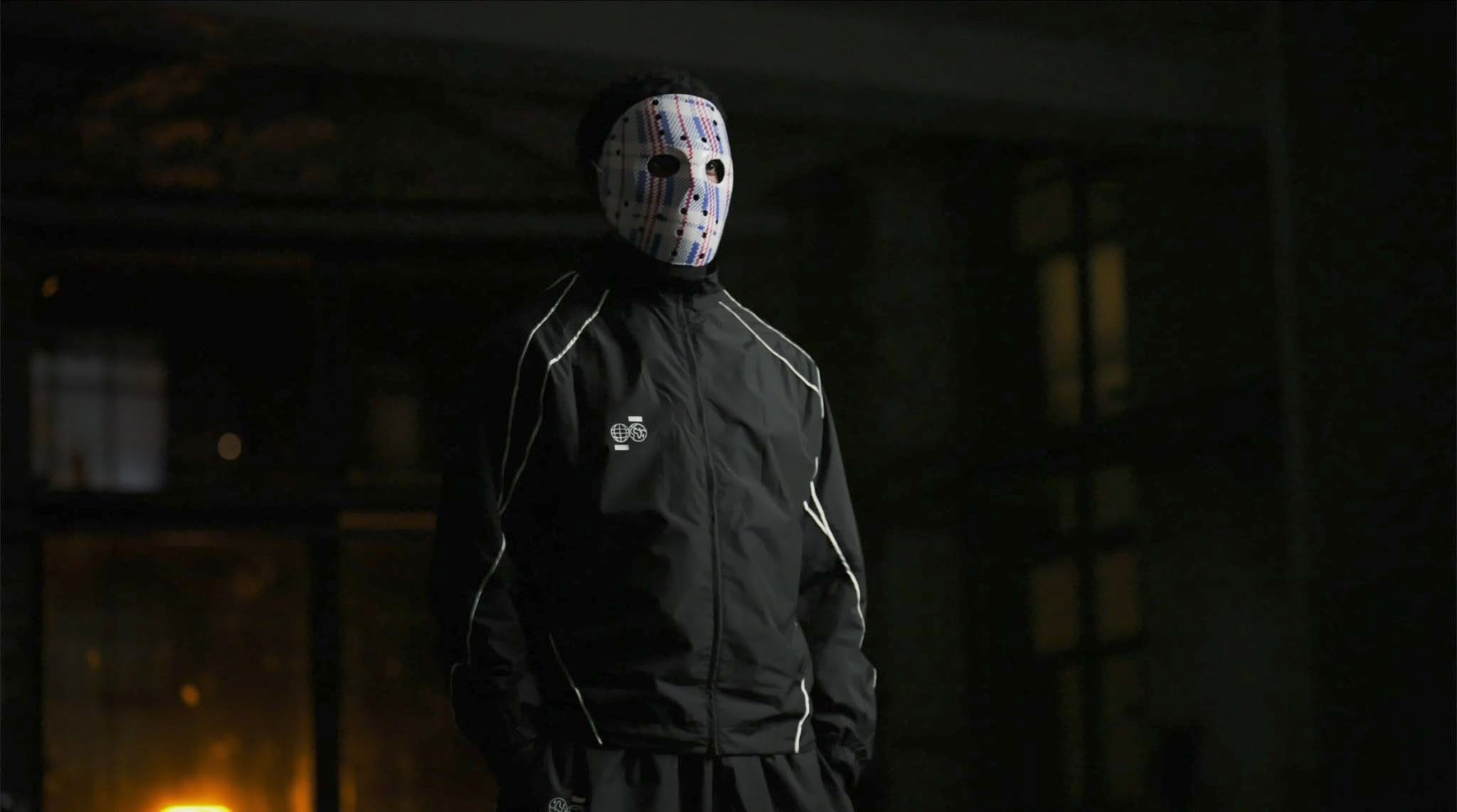
Under the collective name Looty, Nwaubani and Ahmed Abokor walked into the British Museum and captured a LiDAR scan of the stone on an iPad Pro, then cleaned it into a digital canvas of the Rosetta Stone.
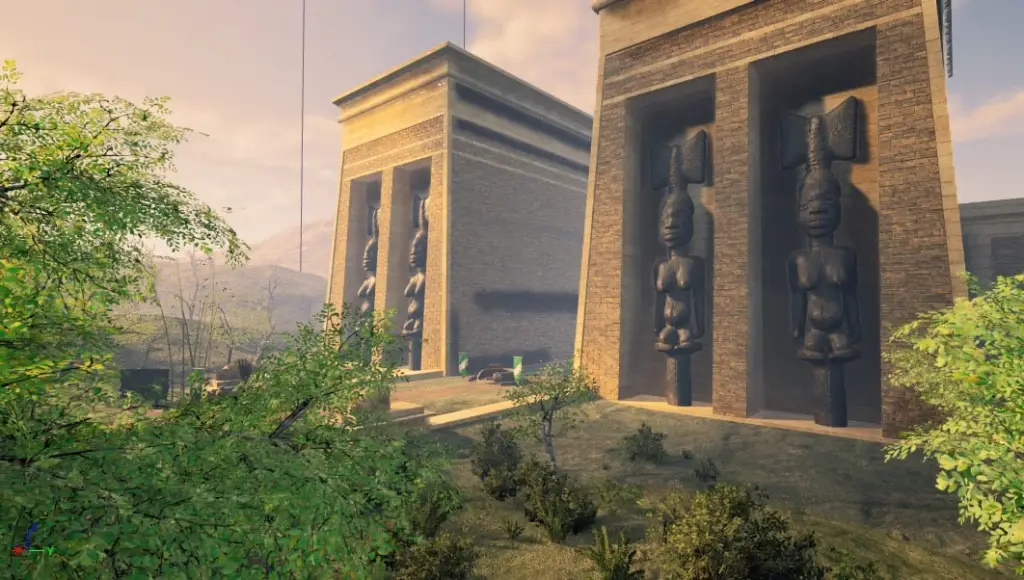
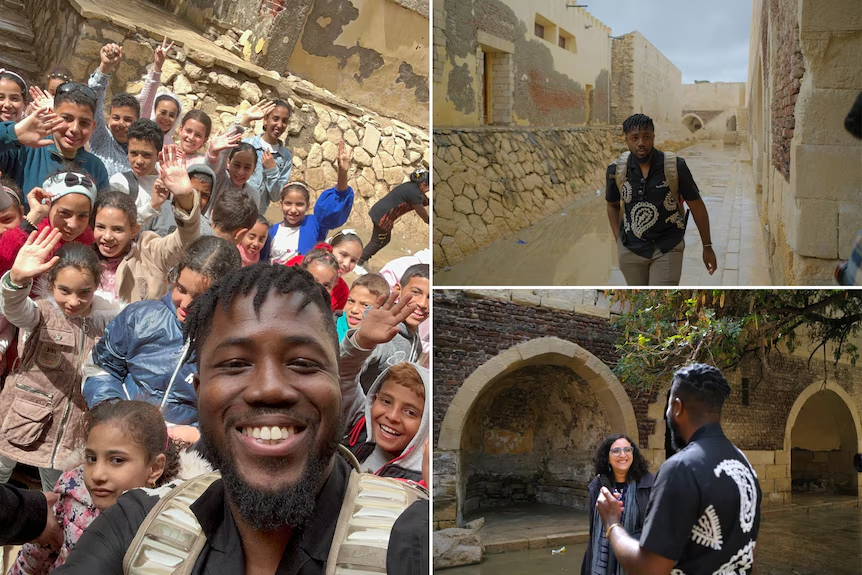
Soon after, the team flew to Egypt and used geolocated augmented reality, the technology behind location games, to place the stone back in Rashid. Anyone who visits can now use their phone to see it standing where it once did.
The physical objects are left to governments. The work is about the return of agency, the return of power, and the return of story, a claim that the right to steward a culture's own artefacts belongs with its people.
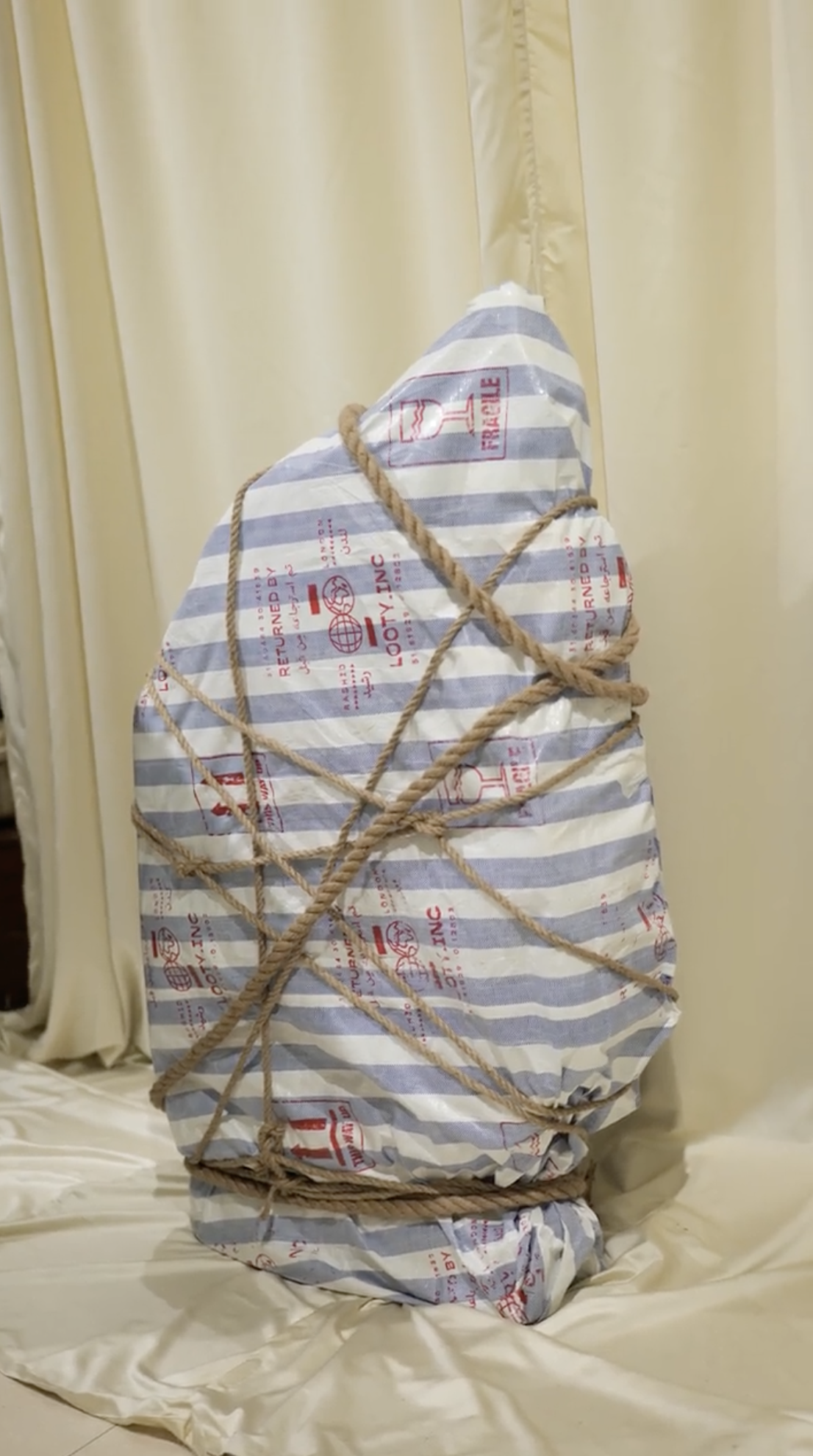
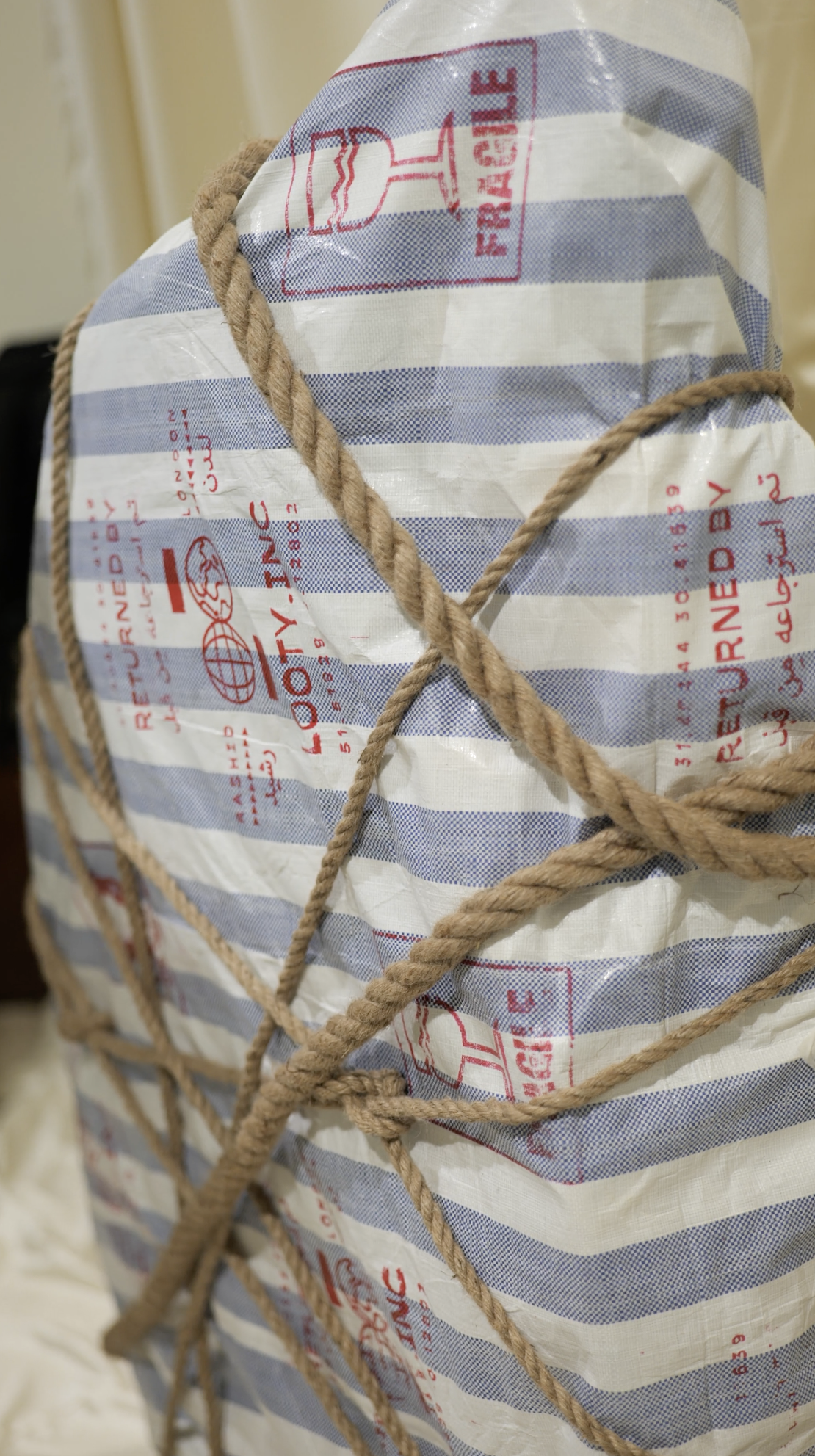
Medium: Social change practice; polyphone sculpture; AR reconstruction; geo-located digital artefact
Dimensions: 1.14 m × 72 cm × 27 cm
Edition: 1 of 5
Context: British Museum — digital heist / installation
What cannot be returned, must be reconceived.
 Chidirim NwaubaniReturn Rashid (Rosetta Stone), 2024View full size
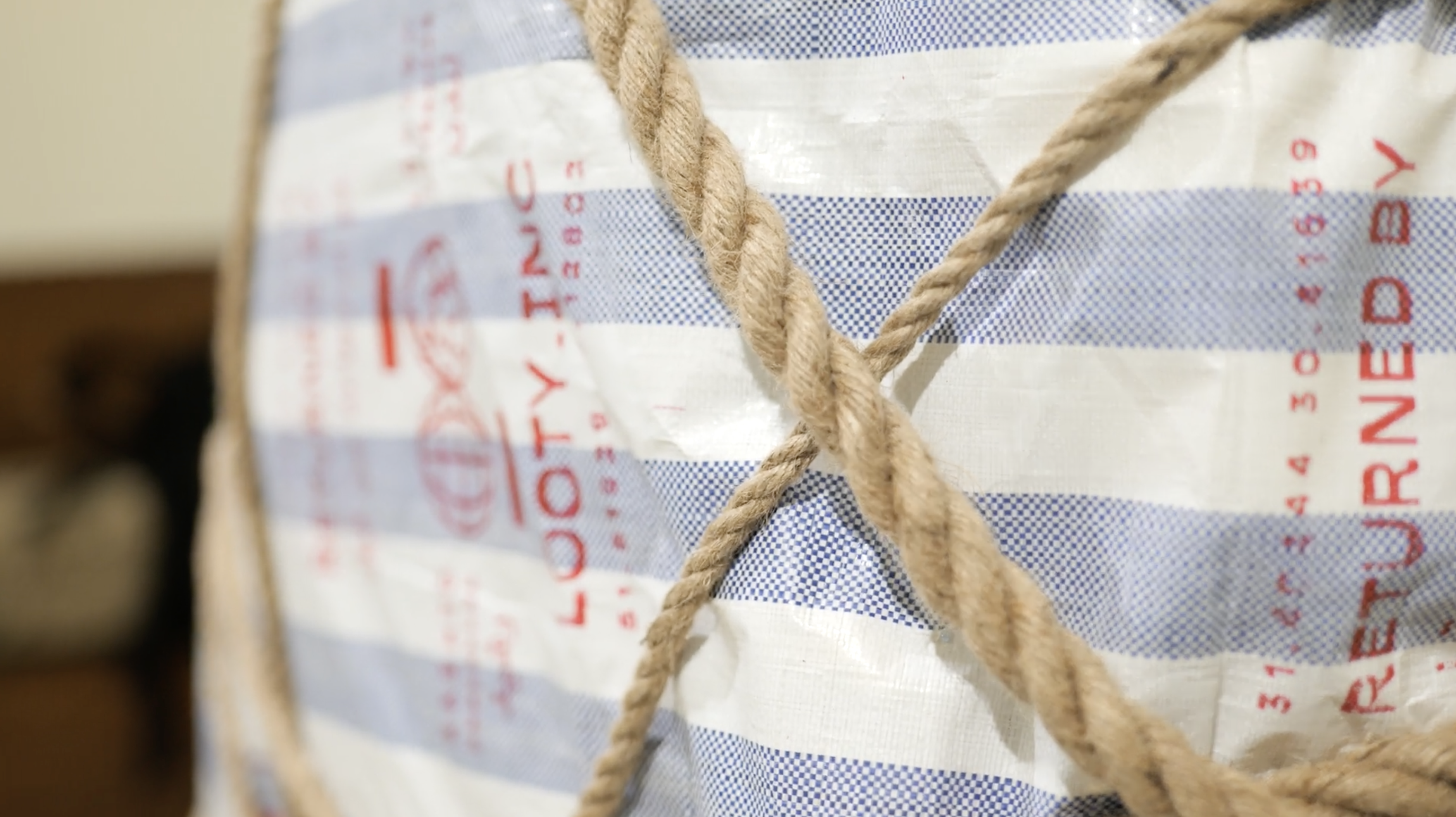 Chidirim NwaubaniReturn Rashid (Rosetta Stone), 2024View full size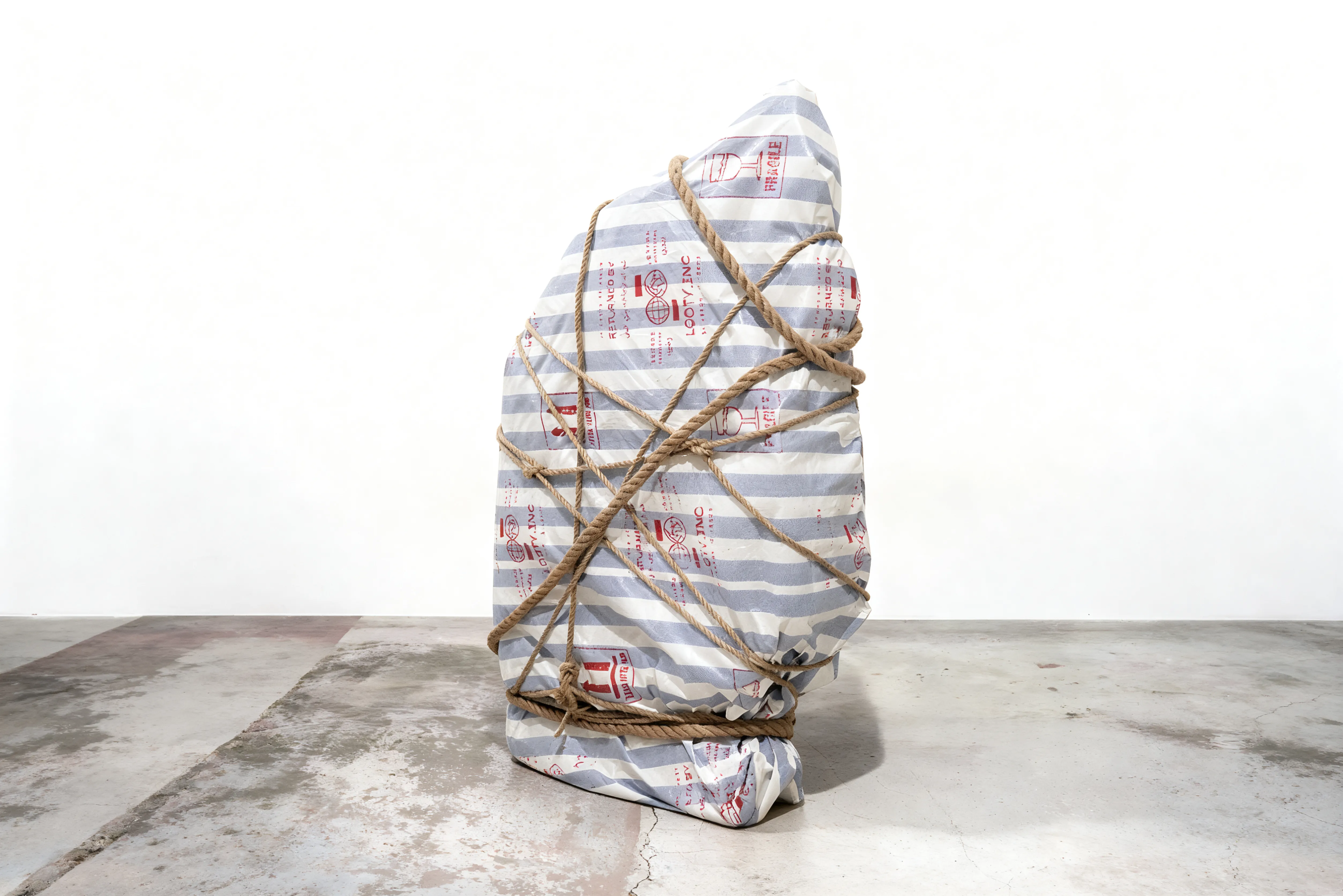
( Project credits )
- CreatorChidirim Nwaubani
- CollectionLooty