When Chidi Nwaubani started dreaming up a new art project during the COVID-19 lockdowns, his first step was to consult a lawyer. “I was like, ‘Wait, is this actually legal? Can someone do this?’” explains the Nigerian-British artist and designer.
Nwaubani wanted to know if he could create a digital form of the Rosetta Stone — now housed in the British Museum after being taken from Egypt in 1799 by Napoleon’s troops, then seized from the French by the British as a “spoil of war”.
How can we steal back something that was already stolen? Is that even possible?
The lawyer told him that reusing an image of the stone would be illegal — the museum owns the image — but its terms and conditions permit 3D scans. “It’s funny, it was a legal investigation that led to the actual final concept.”
Stealing back the aura
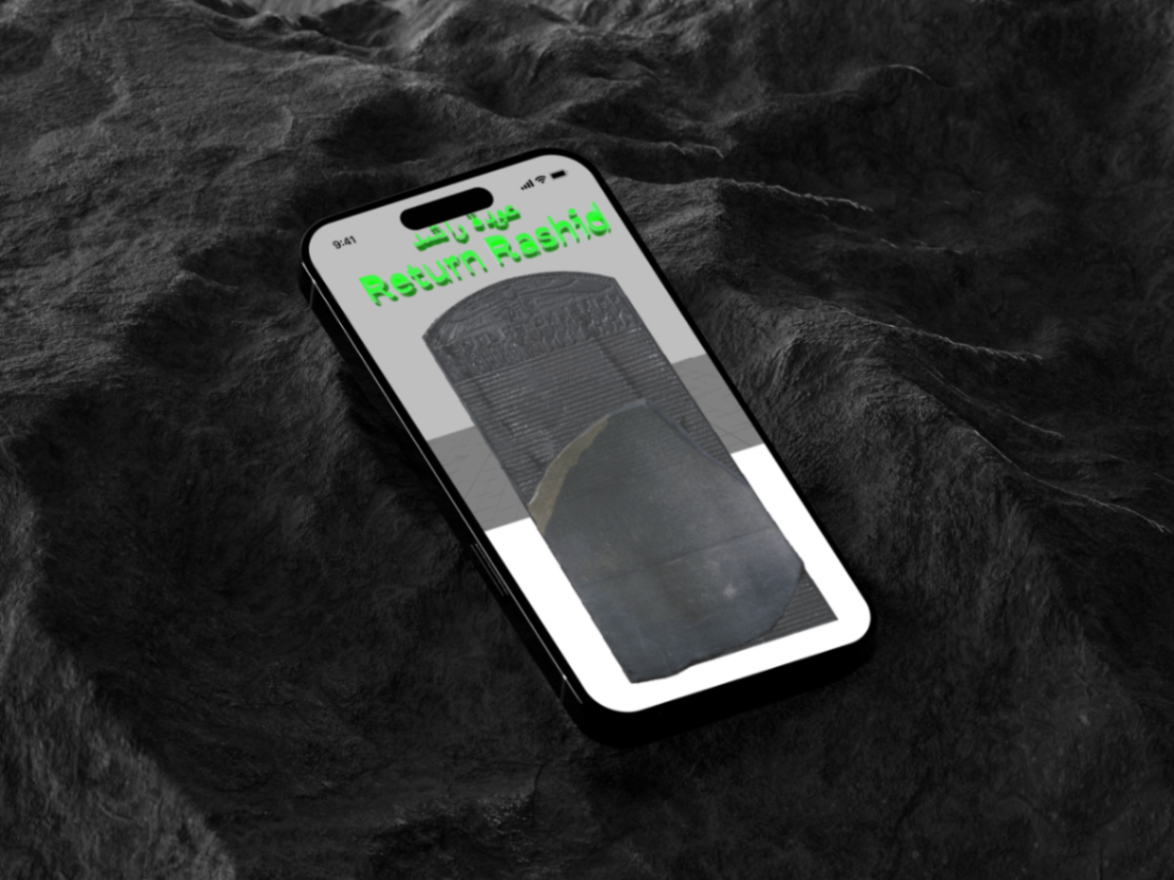
Under the collective name Looty, Nwaubani and fellow artist Ahmed Abokor walked into the British Museum and took a LiDAR scan of the stone on an iPad Pro. They cleaned it up with 3D tools, and had a digital canvas of the Rosetta Stone.
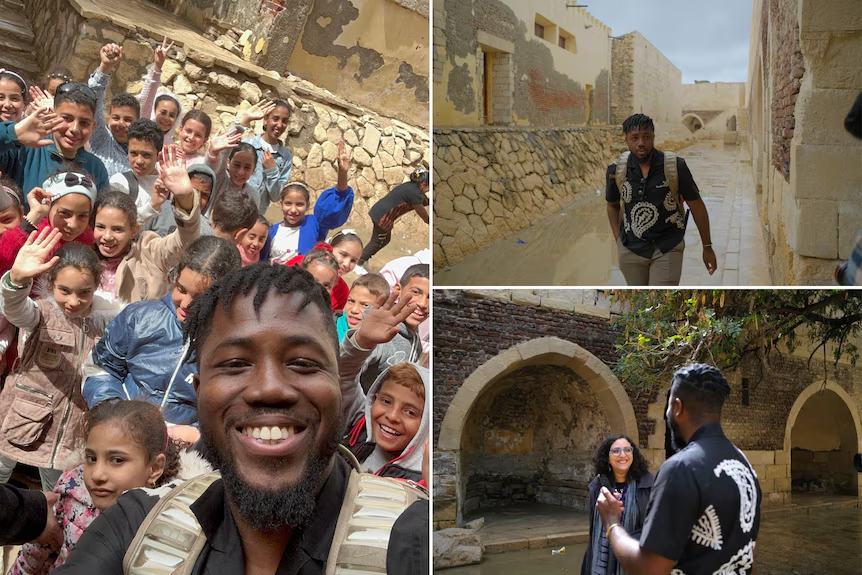
Soon after, they flew to Egypt and used geo-located augmented reality — the tech behind Pokémon Go — to put it back. Anybody who visits Rashid can now use their phone to see the digital recreation standing exactly where the Rosetta Stone once did.
I’m trying to steal back the aura, the soul of this artefact. Now and forevermore, it will be there in its position.