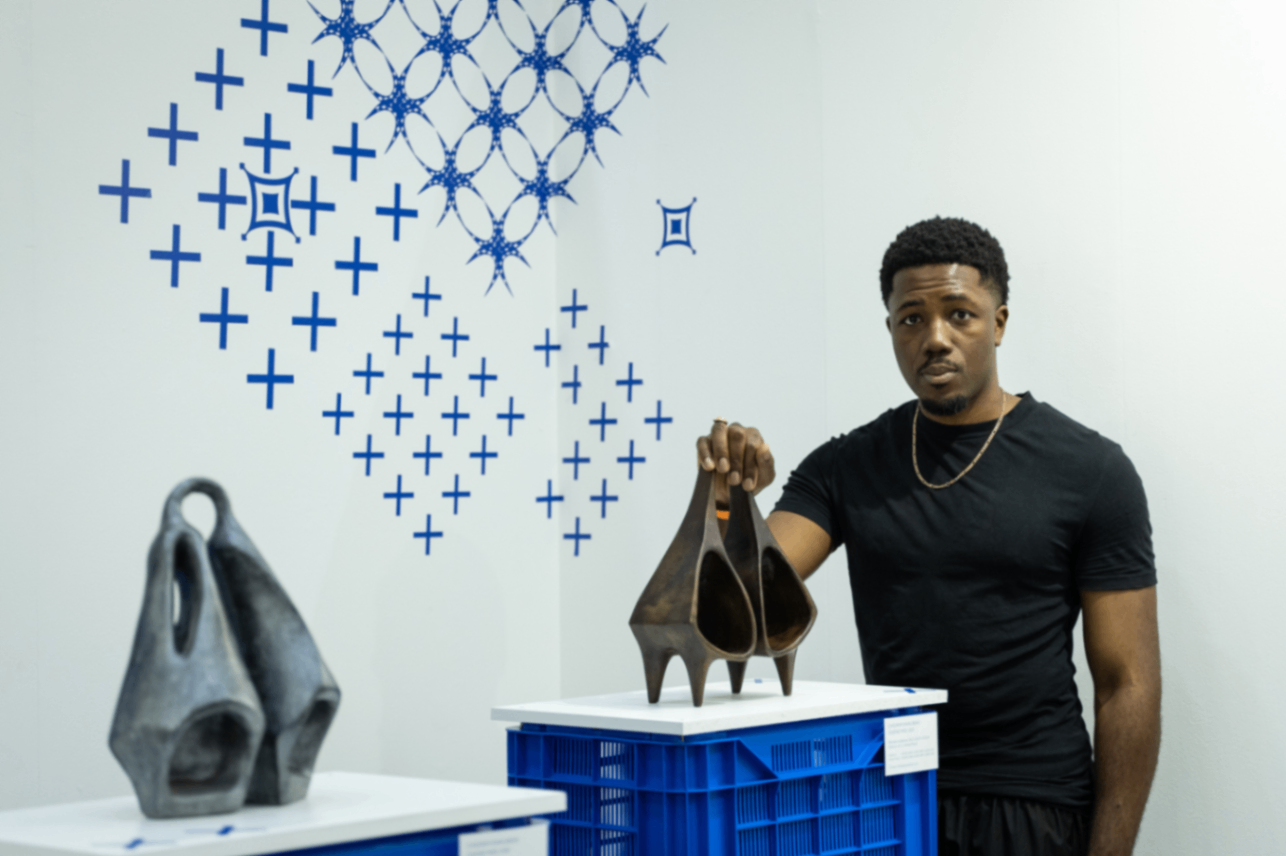
In September 2026 the .ART Domains blog ran an interview with me by Daria Kravchuk: Who Owns the Digital Past? Chidi Nwaubani on looty.art and Digital Restitution. It is the longest conversation I have had on the record about why [LOOTY](/ventures) exists and where it is going. This is the short version; the full interview is on art.art.
Stealing back what has already been stolen
LOOTY started from a question I could not shake: can you steal back something that has already been stolen? Physical restitution is real, and it is happening, but it moves at the speed of bureaucracy and gatekeeping. What is also at stake — and what no committee controls — is meaning: who names the object, who tells its story, who gets to interpret it. ‘Decolonisation’ has become a word institutions say. LOOTY is a tactic for doing something with it.
The hammer and the data
I came to this through design — Graphic Information Design at Westminster, then a decade as a product designer at [Burberry, Artsy and Emirates](/product-design). That background is why I see tech companies and Western heritage institutions as having the same flaw: both have been built without Black voices and without the Global South in the room. As I put it to Daria, “Technology acts as the hammer that breaks the glass of the museum.” The scan gets the object out. Art is what gives the data a life — which is where the Igbo ideas I keep returning to come in: the Ikenga, and the Mbari house.
Digital restitution, defined
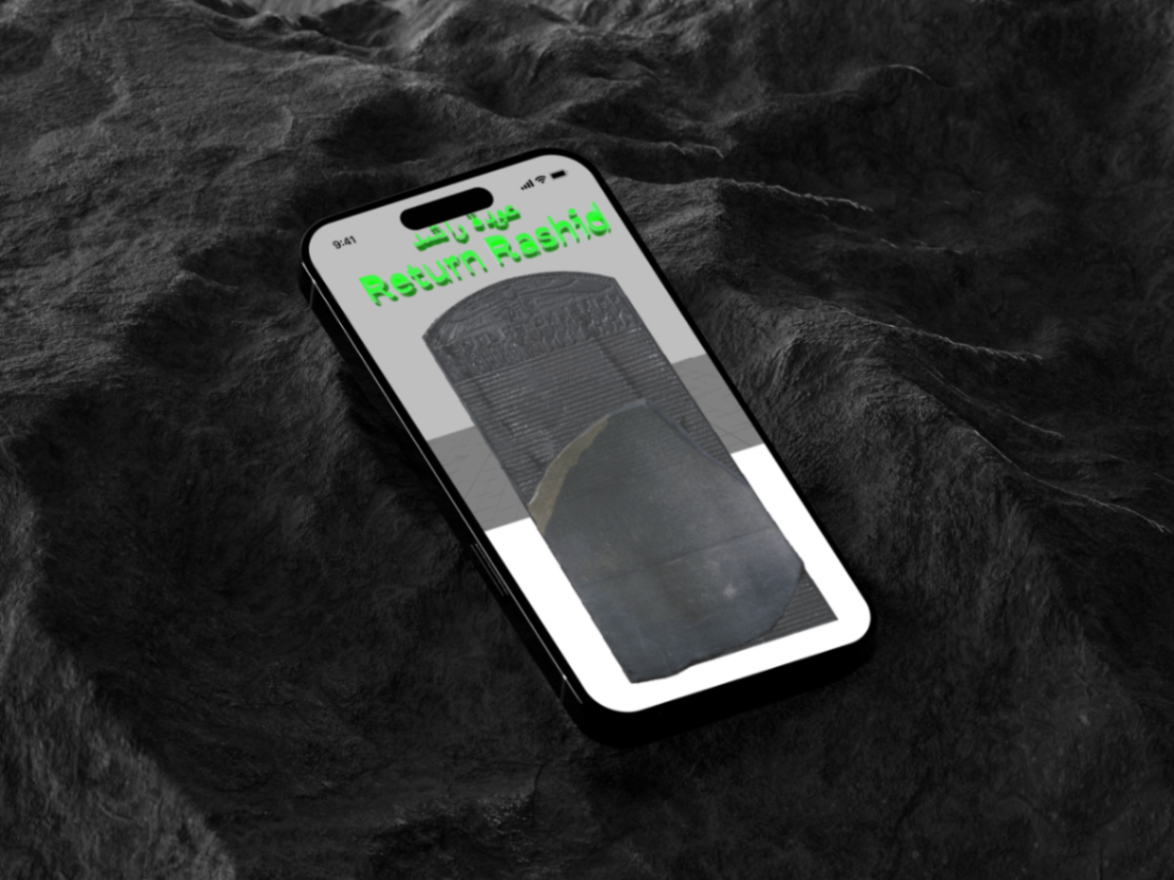
Digital restitution, as I use the term, is immediate sovereignty: counter-archival repair that does not wait for a state-level agreement and does not accept the monopoly European museums hold over their own data. It has an economic side too. The Looty Fund sends a share of proceeds from our digital assets to grants for young African artists. And it exposes the ‘universal museum’ argument for what it is: open-access meshes, LiDAR scans and decentralised networks move the storytelling out of institutional hands. The [Rosetta Stone](/writings/the-rosetta-code) and the Benin Bronzes — [Idia](/works/idia), [Oba Head](/works/oba-head) — are the clearest cases.
Record, interpretation, or a new object?
Daria asked whether a digital twin is documentation, interpretation or a new work. My answer is all three. It is a high-fidelity record. It is a reinterpretation, because every scan is a choice. And it is a new object with its own provenance and agency. What it is not is an excuse — a 3D model never justifies an institution keeping the bronze. The archive I grew up with was static and one-way; the work since layers scans, AR, sound and archival photographs so that something is renewed for the person standing in front of it, which is exactly what [Mbari Memorial](/writings/notice-of-reclamation) does with touch.
The Meta-Museum
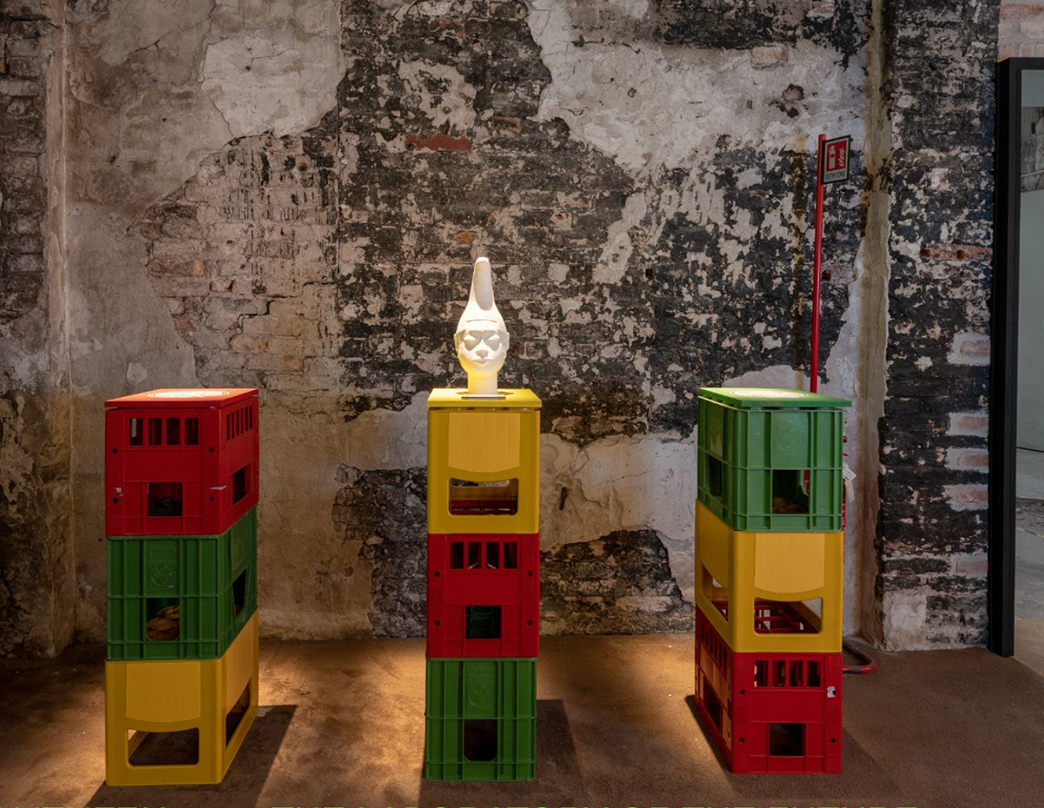
The long-term idea is a borderless, open-source cultural network — a Meta-Museum — where a child in Lagos has the same access to this heritage as a child in London. The honest obstacles are the digital divide, which means mobile-first and lightweight tools or nothing; the lessons of the NFT and Web3 boom; and partnerships with large technology companies that are reciprocal rather than extractive. Nearer term: modular pop-up spaces and decentralised digital networks that can be deployed anywhere, which is what the crate-built installations are rehearsing. The Meta-Museum needs serious investment and is still being built.
Why .art
The domain is a statement: LOOTY is an artistic process before it is a technology. looty.art is where the work is documented and presented; the project is fully itself only where the physical and the digital meet. The interview also points to the Art Voices webinar with Grant Yoon, ‘Is Art Changing, or Are We?’. Read the whole conversation on art.art.