Writing
[ 6 ]Filters:
October 2026
Mbari Memorial — My First Solo Show, Frieze Week
Chidirim Nwaubani — 2 min read
2026
The Rosetta Stone Was Taken From Egypt. This Artist Took It Back
Katherine Smyrk & Marc Fennell · ABC News — 5 min read
February 2026
LG and Chidi Nwaubani Reimagine African Heritage at Investec Cape Town Art Fair
Lulama Klassen · Cape Town ETC — 4 min read
2026
The Rosetta Code · Stuff the British Stole
Marc Fennell · ABC iview — 30 min watch
June 2025
Digital Cultural Heritage: Imagination, Innovation and Opportunity
British Council · Research & Insight — Report
February 2026
Winner at the Cape Town Art Fair
Chidirim Nwaubani — 2 min read
Archive
[ 500 ]Channels:
A live feed from Are.na — images, files, text and links, collected as they are found. Updates here when the channels do.
2026-01-20 12.13.40
1f9ff6214961823.6761b986ba2e0.gif
:: facility-tb ::
https://www.instagram.com/p/DKtZ1totSDM/?img_index=2
Instagram
Preludes by Flaer (2023)
407387712_371898818629387_8790221061474631847_n.jpg?stp=dst-jpg_e35_p1080x1080-efg=eyj2zw5jb2rlx3rhzyi6imltywdlx3vybgdlbi4xn...
tumblr_nihx3qxjlx1qzsdnso1_1280.jpg
(48) Likes | Tumblr
sys-1.gif
image.png
HAUNTOLOGY VOL. 1
https://www.instagram.com/chrome.xyz/
image.png
St. John the Forerunner
ad59de34-5e7e-442f-8fbb-7546ee7ce140.jpg
Untitled
Henri Alexander Levy, Synthesizer Prison Unit
https://www.henrialexanderlevy.com/#/sculpture/synthesizer-prison-unit
Arthur Jafa, Ex-Slave Gordon, 2017, vacuum formed plastic, 57 × 44 × 9 inches
https://spruethmagers.com/exhibitions/horror-group-exhibition-los-angeles/
4c5395c7a0fc3e00195b17bf00628675.jpg
Bill Armstrong, Apparition #911 (2005)
1920px-horae_ad_usum_bituricensem_p19.jpeg
iF Design - LG HU710PB
01 — slashuntitled.com
cargo.site
Liebling, 2025
Sarah Księska, German
7399b2a80b89ffac13bc25abfacfd9f5.jpg
God Creating the Universe, 13th c.
God Creating the Universe
German medieval sculptor
13th century
Stone
Cathedral, Freiburg
Until the advent of Copernicus, all knowledge about the universe had to be made to fit into the framework of the Ptolemaic model in which the Earth was firmly the centre of everything. The sculpture in the Freiburg Cathedral shows God creating the Universe, with the planetary spheres inside, covered by the sphere of the fixed stars.
Servizio da cocktail "Ferris Wheel"
Matilde Piacentini
Nome dell’oggetto, collezione in cui lo avete trovato
‘Ferris Wheel’ and Manhattan skyscraper shaker set, appartenente alla collezione della Pullman Gallery
Tipologia di oggetto
Servizio da cocktail con shaker
Luogo
Il servizio da cocktail è stato prodotto a Rome, città statunitense della Contea di Oneida, nello stato di New York
Data
La produzione dell’oggetto risale all’anno 1936
Designer
A lavorare al progetto del servizio da cocktail “Ferris Wheel” è la geniale figura di Norman Bel Geddes, all'anagrafe, Norman Melancton Geddes. Nasce il 27 aprile del 1893 ad Adrian, in Michigan e vive sino all’anno 1958, dove si spegne all’età di 65 anni.
Una volta terminati gli studi all’Art institute di Chicago, Norman, protrasse la sua passione per l’arte anche nelle sue professioni. Specializzandosi in periodo di piena crisi statunitense, Geddes acquisì visibilità rendendosi noto per la grande fiducia che egli ripose nel futuro dell’era delle macchine.
Lavorando nel campo della pubblicità (1913-16) e della vetrinistica (1927-30), maturò una propria conoscenza delle vendite e del commercio; la comprensione dell’importanza dello stile di un artefatto e quindi non solo della propria funzionalità lo portarono ad apportare lo stile a goccia (Streamlining, lo stile aerodinamico, in voga in quegli anni) ad ogni superficie dei propri progetti.
Il ruolo fondamentale nel gran successo che riscosse fu la sua fervida immaginazione a cui l’uomo non pose limiti; le forme filanti e snelle, forti ed innovative raggiunsero le esposizioni universali, i semplici arredi di casa e persino i mezzi di trasporto. Il contributo alla lavorazione scenografica nel teatro dell’opera del Metropolitan Opera House fu di base per lo sviluppo delle ampie abilità da scenografo di cui godeva Norman; non c’è da stupirsi che una delle sue opere più memorabili, “Futurama”, da un semplice padiglione divenne una vera e propria giostra interattiva ed al tempo stesso educativa.
Impresa / committente
Revere Copper fu l’impresa che collaborò con Bel Geddes per la produzione del set da cocktail “Ferris Wheel”.
Revere Copper è un’azienda fondata nel 1801, considerata una tra delle più antiche aziende manifatturiere americane. Tutt’ora attiva, opera in diversi campi quale quello dell'architettura, dell'elettricità, delle telecomunicazioni, dei macchinari industriali, delle attrezzature e altri ancora.
L’impresa nasce a seguito della Rivoluzione Americana per esigenze industriali e militari. Con il fine di migliorare le prestazioni militari della propria nazione, Benjamin Stoddert, comprese l’importanza di investire i propri averi sulla laminazione del rame. Quest’ultima, con il compito di rivestire i fondi navali, apportava notevoli miglioramenti alle navi della marina, tra i quali: mantenne puliti gli scafi, aumentò la durata di navigazione assieme alla durata del tempo in cui una nave poteva rimanere in servizio durante le revisioni. Inoltre, la placcatura in lamine sottili, a contatto con l’acqua salata, si ossidava impedendo l’accumulo di detriti e rallentando il processo di degradazione del legno.
Operai metallurgici come Paul Revere vennero quindi finanziati per l’accurata lavorazione del rame. L’uomo seppe ricoprire al meglio il ruolo grazie ad una precedente formazione professionale; Paul difatti al tempo del finanziamento aveva già lavorato nel campo come argentiere. Il suo bagaglio di esperienze comprendeva l’abilità di fusione del metallo, mosso dall’incarico di produrre campane e cannoni, ma anche nella forgiatura di bulloni e punte di rame.
Al crescere della propria fama, Paul Revere fondò la Revere Copper & Co.
Materiale/i e tecnica
I materiali utilizzati nel set da cocktail sono principalmente due, ossia, ottone cromato e vetro. Il primo compone quasi totalmente l’intera struttura (ed accessori annessi) del set da cocktail mentre il vetro è ripreso nei 12 bicchieri da cocktail e nei 4 vassoi di vetro che giacciono lungo la Ferris Wheel.
Dimensioni dell’artefatto
24x22.7x17.25 pollici (61x57.8x43.8 in centimetri)
Descrizione dell’artefatto
Poche decadi prima dell’avvento della Seconda Guerra Mondiale cessò il Proibizionismo; architetti e designer dell’epoca si focalizzarono nella progettazione di strutture volte a garantire intrattenimento e svago ai cittadini statunitensi. Vennero ideati edifici dalle forme stravaganti e dinamiche, spesso irrealizzabili, come il ristorante Aerial che lo stesso Bel Geddes tentò di progettare. Ciò che accomunò i vari progetti di bar e nightclub fu la sperimentazione dei materiali allora considerati all’avanguardia; metalli cromati e vetro venivano ora pensati per ricoprire le ampie superfici delle nuove architetture. Come sopra citato, sono proprio questi i materiali che Norman volle adottare per il suo set da calici.
La denominazione dell’ornamento non è casuale; “Ferris Wheel” si traduce dall’inglese come Ruota Panoramica. Osserviamo come spesso Bel Geddes scelse, per la produzione di oggetti di minori dimensioni, la ripresa di forme che alludevano a strutture, mezzi di trasporto e addirittura palazzi di entità largamente maggiori. Il set da cocktail, a forma di ruota panoramica, riproduce le componenti principali di quest’ultima copiandone la sua principale funzione, quella di rotare. Il “cerchione tubolare”, in ottone cromato, è affiancato da una coppia di shaker che fungono da “motori” della giostra. Gli shaker di Bel Geddes comparvero nuovamente in ulteriori progetti. Nel servizio “Manhattan” la stessa forma, ora posta su un vassoio a gradoni, ricordava vagamente una piazza con grattacielo mentre la bottiglia “Soda King” Syphon Bottle acquisì l’aspetto di un razzo spaziale.
L’oggetto è finalizzato ad agitare e successivamente servire bevande alcoliche, i vassoi in vetro sono invece pensati per la degustazione di olive e stuzzichini.
Importante da menzionare fu la sua comparsa nel film “Il Padrino II” del 1974.
Motivazione della scelta e attinenza con l’argomento della settimana
Lo Streamlining segna un importante cambiamento avvenuto nella storia del design, si inizia a parlare della figura professionale del disegnatore industriale.
La componente estetica acquisisce un ruolo fondamentale nel portare a buon fine la vendita. Bel Geddes scrisse:” La vetrina del negozio è un palcoscenico sul quale la merce viene presentata come attore... La vetrina deve catturare lo sguardo; focalizzare l'attenzione sulla merce; persuadere l'osservatore a desiderarla". Ferris Wheel appare nelle pubblicità come un prodotto sofisticato e accattivante ma al tempo stesso economicamente accessibile alla classe media.
Il prezzo conveniente è dato da un uso minimo ma efficace dei materiali che rispecchiano il gusto per le cromature, che si ebbe in quegli anni. Ma “Ferris Wheel” non si relaziona al concetto di macchina solo per le materie impiegate nella sua produzione; a farlo sono anche la struttura e le qualità che acquisisce l’oggetto. Le superfici sono lucide e lisce, le sporgenze risultano levigate come quelle di un macchinario destinato a muoversi. Nel 1932, Bel Geddes, scrivendo il libro “Horizons”, impose che il design moderno fosse in grado di rispondere alla crescente velocità di aerei, barche, automobili e qualsiasi altra cosa si muovesse. Bel Geddes si preoccupava in particolare della resistenza al vento e delle superfici adatte a consentire un passaggio fluido dell'aria.
Le architetture dello Streamlining ambivano a vertiginose verticalità, gli shaker, che fungono da “motori” sembrano slanciarsi verso l’alto.
I disegnatori industriali, del movimento, non vollero rinunciare alla funzionalità degli oggetti ma dovettero riconoscere quanto un aspetto accattivante fosse necessario nel mondo del mercato. Gli oggetti acquisirono forme stravaganti, Norman modellò il servizio sottoforma di ruota panoramica; eppure, la sua funzionalità non risulta camuffata, è facilmente intendibile. Walter Dorwin Teague affermò che il conferimento di una sagoma aerodinamica a oggetti immobili, destinati all’arredamento, servì ai designer per trasmettere lo spirito del tempo. Una necessità tipica dei mezzi di trasporto, la riduzione di tempi e distanze, è ripresa in Ferris Wheel; gli alcolici vengono serviti con immediatezza, senza rinunciare al gusto estetico, un considerevole numero di bicchieri viene ora offerto in contemporanea.
Riferimenti
Bibliografici
https://books.google.it/books?id=H8gAaZj2e-AC&pg=PA90&lpg=PA90&dq=Norman+Bel+Geddes+%E2%80%98Ferris+Wheel%E2%80%99+cocktail+set&source=bl&ots=QmtXOINYsd&sig=ACfU3U0gkrBZ0JNYoLkS-urFDhgoP4YTTA&hl=it&sa=X&ved=2ahUKEwiao7LTz6j8AhWVc_EDHf57AM44ChDoAXoECBQQAw#v=onepage&q=Norman%20Bel%20Geddes%20%E2%80%98Ferris%20Wheel%E2%80%99%20cocktail%20set&f=false
Consultazione del libro “Il progetto della bellezza” di Maurizio Vitta
Web
https://pullmangallery.com/item/norman-bel-geddes-ferris-wheel-cocktail-set-1936/
http://www.evanmcglinn.com/Shaken%20Not%20Stirred.pdf
https://www.artic.edu/artworks/184673/manhattan-cocktail-set
https://reverecopper.com/about-revere/
https://arthistoryunstuffed.com/norman-bel-geddes-domesticating-streamline-design/
https://en.wikipedia.org/wiki/Revere_Copper_Company
visione del video https://www.youtube.com/watch?v=GoAdcujfo3A
https://www.sbandiu.com/2019/09/11/norman-bel-geddes/
https://it.wikipedia.org/wiki/Norman_Bel_Geddes
visione del video https://www.youtube.com/watch?v=uymXWa89Ylo
Michael Heizer: Altars
altar space flag_print.v1-outside_proc.jpg
https://www.are.na/altar/channels
Dead Christ Supported by Two Angels, 1460
Giovanni Bellini, Italian
Fritz Klimsch
img_8372.png
Sarcophagus of Junius Bassus (Reproduction)
3e41a66c-6b3a-451c-853e-1e9510b46cf2.jpg
Y8YrCC
(1) Boîte de réception • Direct
451139129_812513154352705_5392775205952354391_n.jpg?stp=dst-jpg_e35-efg=eyj2zw5jb2rlx3rhzyi6imltywdlx3vybgdlbi4xndqwede0ndau...
St. Augustine in His Study, 1490
Sandro Botticelli, Italian
1740564516939.jpeg
bc152fbaad624dbf79338ae6fed6d44b.jpg
2690cdd9-2c43-4370-bd3b-0e398f330705.png
488570992_18502344721051158_773966422183353745_n.jpg?stp=dst-jpg_e35_tt6-efg=eyj2zw5jb2rlx3rhzyi6iknbuk9vu0vmx0luru0uaw1hz2v...
image.png
769aee9c-35d9-44cb-bb48-d4f2145fa9c8.png
carved Lenovo laptop
ed14592e-b076-45c9-930c-6a8adfd2c16b.jpg
stavroteka
https://www.instagram.com/p/DG0s-I2CYp6/
1024px-rostro_tart-sico_de_el_turu-uelo_-badajoz-.jpg
image.png
cd9d3af3432f796971841fcb5b9d883028b6afa3-2000x2000.jpg?w=3840-h=3840-q=95-fit=max-auto=format-width=3840
c6ed68bed815d34ffcdc01a9f12da189c34df91b.pnj
Image Research - Gradient Maps
3a2635e0-c4f0-42ea-b830-c60c36987a01.jpg
industrialkonzept on Instagram: “Ca’n Terra by Ensamble Studio
Ca’n Terra (meaning “house belonging to the earth” in Catal...
6,272 likes, 26 comments - industrialkonzept on December 9, 2024: “Ca’n Terra by Ensamble Studio
Ca’n Terra (meaning “house belonging to the earth” in Catalan) emerged from a serendipitous discovery during a family vacation. Stumbling upon what seemed like a cavern, the couple realized it was an abandoned Mares stone quarry, once used as shelter during the Spanish Civil War. Inspired, the architects (@anton_ensamble) acquired the site and began transforming it into a unique holiday home. The process started with detailed laser scans of the dark, raw space, enabling the architects to explore its potential and shape its interior. Spanning 1,000 square meters, the home reveals a sequence of undefined rooms, each adaptable as social or private spaces depending on need. The minimalist furnishings are carefully chosen to integrate seamlessly into the carved nooks and crannies. Metal elements are introduced sparingly, serving only functional purposes like balustrades for safety between levels. Photos: Iwan Baan (@iwanbaan)
industrial”.
David Hammons
table 1296, 2021
Chris Fusaro, Canadian
459823736_1572541513680821_966601324409382554_n.jpg?stp=dst-jpg_e35-efg=eyj2zw5jb2rlx3rhzyi6imltywdlx3vybgdlbi4xndqwede0ndau...
gamyn-bxiaed6po?format=jpg-name=medium
342084447_183015211238527_2807348073890385930_n.jpg?stp=dst-jpg_e35-_nc_ht=scontent-lax3-2.cdninstagram.com-_nc_cat=107-_nc_...
original_0eaf98b465505efdc5262bcb83c53aff-1080-1080.jpg
63a1a5abeba81491a74323468624cc47_f6bbdbf5_500.jpg
screenshot_2019-05-24-hundred-best-arabic-posters-a-graphic-design-competition-searching-for-the-best-posters-in-the-arab[.....
396957375_865318745208587_7417322395736444329_n.jpg?stp=dst-jpg_e35-efg=eyj2zw5jb2rlx3rhzyi6imltywdlx3vybgdlbi4xndqwedk2ms5z...
Data Dots Emotional Intensity, 2015
Lia Cook, American
tjp_south32_1500x18754.jpg
rota-lamp-3.jpeg
tags:
Furniture, Modern furniture, Minimalist design, Table lamp, Metal, Glass, Aluminum, Sculptural form, Geometric form, Modern, Minimalist interior, Elegant, Artificial light, Accent lighting, Symmetrical, Polished, Smooth, Studio photography, Product photography, Detail view
description:
A modern sculptural table lamp with stacked geometric metal frames and illuminated frosted glass panels, photographed against a neutral background with a power cord visible.
source:
https://stvincents.wpenginepowered.com/wp-content/uploads/2022/11/Rota-Lamp-3.jpeg
page title:
rota-lamp-3.jpeg
captured:
2026-03-06
Alexandre Charpentie, Martydom of Saint Sebastian, c. 1897
Statuette of a Child God, probably Horus the Child, 664–30 BC
Unknown Artist, Egyptian
Angel Holding Scroll, 1400
Giovanni Balducci, Italian
One of the Set of the Four Evangelists: John, 1580
Alessandro Vittoria, Italian
Figure of a Seated Leader, 300-600 CE
Totonac, Remojadas
Veracruz, South-Central Gulf Coast, Mexico
glitch-.jpg
The Bride Stripped Bare By Her Bachelors, Even (1915-23)
This is a piece from Marchel Duchamp, a famous artist who is known for his so-called readymade’s. Duchamp took mass-produced objects, did not change or edit them and presented them as art, to mock artistic practices and to show that everything can be viewed as art. The concept of detournement which the Situationists practiced, is similar to Duchamp’s readymades yet with a more political means. In this work, there are two big sheets of glass put together vertically in a gold frame made of metal. Interpretations of this work lean towards sexual reproduction and love. In 1926, the glass broke. Duchamp found this to make his work more complete. By stating so, he critiqued mechanical reproduction and techno-utopia by consolidating technical failure and accident or, glitch. Art is a ‘’bearer of its own content’’, and since the glass is broken the glitch here is the art (IVC Author, 2014). Furthermore, the broken glass makes visible what normally is invisible and thus draws attention to otherwise ‘’an unconscious and ideological relation to knowledge and truth’’ (IVC Author, 2014). Applauding or even intentionally cause technical failures to convey a critique or express a vision is nowadays very common in art.
Wall relief created by Costantino Nivola for the Olivetti' showroom in New York (1953) © Museo Nivola
453399651_790457573171953_7634153993689028688_n.jpg?stp=dst-jpg_e35_p1080x1080-efg=eyj2zw5jb2rlx3rhzyi6imltywdlx3vybgdlbi4xn...
John Hejduk / chapel
Inside Doorway Sas Bahu Temple, 1882
Lala Deen Dayal, Indian
311254633_1461406751045773_727905040328645196_n.jpg?stp=dst-jpg_e35-_nc_ht=scontent-mrs2-2.cdninstagram.com-_nc_cat=101-_nc_...
Enzo Mari
tumblr_pj4h8u7luc1vybumg_1280.jpg
main-image-2.jpeg
Untitled
original_698cd13e554fec4cb369411fb258f30d.jpg?1624958434?bc=0
87587a4f17ef52a4196530.webp
IDLE™ // No-Mind Extrait de Parfum
KALI
destruidora
Untitled
1-2oik6kmiuezzvc1x5yenuw@2x.jpg
1253384.jpg
tumblr_or14d2dssz1rvnsnmo1_1280.jpg
thibaultjouvent_18514249_133528537196209_3986097497457033216_n.jpg
5471.jpg
CASABLANCA: THE COMPENDIUM OF HOME (Heidi Lu, 2019)
“Diaspora, relates to forced movement, exile and a consequent sense of loss derived from an inability to return. This is applied to the mass movement of Africans via slavery… this association of movement and migration with trauma, and containing within it a constant loss and yearning for an obtainable home is one of the main foci of critiques of the classical model of diaspora”.
-Virinder S. Kalra
In his seminal work Black Morocco: A history of Slavery, Race and Islam, Chouli El Hamel writes that “the situation in Morocco (trans-Saharan diaspora) was similar to the trans-Atlantic diaspora, with zones of cultural exchange, borrowing, mixing and creolization as well as violation, violence, enslavement and racially segregated zones” (Hamel 2013: 5). He argues that although Moroccans do not claim that slavery never existed, their ‘culture of silence’ regarding the history of slavery and race has resulted in black Moroccans being located on margins of community. The trans-Saharan trade was the predecessor to the European trans-Atlantic trade, and existed for far longer, however it is the least discussed of the two. This project seeks to offer some redress to the silence from a speculative, architectural lens.
Moulay Ismail (Arabic: مولاي إسماعيل بن الشريف ابن النصر), was the longest reigning Sultan of Morocco from 1672-1727. He was romantically involved with many of his slaves, most notably with Lalla Aisha Mubarka, often referred to as Zaydana, who was his “favourite wife and queen of the palace” (Hamel 2013:192). Zaydana was purchased for the Sultan’s harem as a slave concubine for sixty ducats. Despite the fact that Sultans only married women from prominent families, the Sultan married Zaydana who grew to have a significant influence over the state’s affairs through her personal influence over him. The “Empress of Morocco”, Zaydana is described as “black, and of enormous height and size…[with] power over [the Sultan’s] mind…manag[ing] him as she pleases” (Hamel 2013:193).
The writing of history has always been curated and recorded by those in positions of power. This distortion of historical narratives continues to perpetuate legacies of colonisation and oppression. Despite her power at the time, Zaydana’s story is under explored yet holds revealing insights into black female slave historical narratives of triumph over the men and spaces that would seek to control them.
My Major Design Project seeks to uproot and unearth the ‘silenced’ narratives of the largely under-documented trans-Saharan slave-trade through a contemporary retelling of Zaydana’s history. Sigmund Freud would refer to exposing these ‘historical edits’ as unheimliche, meaning ‘[that which] should have remained hidden and secret and yet comes to light’ (Freud 1949:12). Architecture is often said to be a vessel for politics, memory and history, physically and metaphysically engaged with questions of the self and the environment in built form (Pallasmaa 1996). Through a speculative proposal - a home for Zaydana - I explore how retelling her story through a domestic architecture can reveal novel, emancipatory configurations and constructions of the home, particularly for black Morrocan women today.
As with any cultural grouping; in Morocco, traditional ‘home’ typologies are indicative of various social orders and hierarchies in family structures, societal structures, and private/public relations. Arising from the French colonisation in Morocco, Moroccan women lived in “enclosed households” with harems, where extended families lived together. Harems were also where concubines were housed, in the service of kings and masters. Social and communal life is played out in several public ‘home’ typologies in Morocco - in the mosque, the hammam (public baths),the riad (courtyard), and the communal bakery. Looking critically at the construction of ‘home’ and its complex history and relation to several dynasties of power in Morocco, my project uses a close reading of the history of slavery in the region, resulting power-relations and gendered exploitation today as a conceptual setting for the new house for Zaydana, where histories of oppression, subversion and triumph of black female slaves are housed; a repository of both fact and fiction.
Building on the notion of the Unheimlich as a concept related to “feeling” more than it is related to the visual, the project also draws on Pallasmaa’s ‘tools for memory’ (Pallasmaa 1996:47), tied to the haptic, the performed, the sensory and the felt, the realm of experience, rather than relying on the visual alone. The project uses these and other tactics through story-telling, performance and re-enactment to suggest a new architectural vocabulary of the Moroccan ‘home’ that attempt to undo the hegemony of the dominant narrative.
art-by-anatoly-fomenko-1945-a-professor-of-math-and-v0-dgdlevuagbpc1.jpg?width=735-format=pjpg-auto=webp-s=024515b1b7312b486...
https-::commons.wikimedia.org:wiki:file-mandelbrot_set_-_normal_mapping.png
italy-type_knoxie-le-roux_1827.jpg
save-insta-video-1-.gif
https://www.instagram.com/shaunwellens/?hl=ru
20220124_v06.20220124_cam_02_v01_1.gif
91c1975aaa664a90875e6dbc7fc2df07.jpg
5465b5af-cb26-42dd-aa79-34439ea47a34.jpeg
Instagram
Instagram
TEXThttps://heikejung.de/Works/Mesmerizing Mesh/1962_S0B1861_web_portrait.jpg
Mesmerizing Mesh
https://heikejung.de/Works/Mesmerizing Mesh/1962_S0B1861_web_portrait.jpg
Mesmerizing Mesh
Mesmerizing Mesh
2021-
adidas_y-3_qasa_adobeexpress-6-.gif
Patterns
Mirror Mirror Gallery
Mirror Mirror is an online gallery and editorial platform aimed at providing infrastructure for the continuity of art, design & culture and for publishing critical writing on the creative industry.
b151da51-c6f0-4e85-9173-68dfeed384aa.jpg
Aart Verrips (@aart.verrips) on Instagram
@trevor_stuurman for @time The Next Generation Leaders issue production design and styling @chloeandreawelgemoed with @lampostsa grooming @nthabisengsenong thanks @whitneyhollingtonmatewe photo assist @zwele_
large.jpg
https://chicanta.tumblr.com/post/619857786884456448/%EF%BD%83%EF%BD%95%EF%BD%8C%
https://chicanta.tumblr.com/post/619857786884456448/%EF%BD%83%EF%BD%95%EF%BD%8C%EF%BD%94%EF%BD%95%EF%BD%92%EF%BD%85
screen-shot-2018-10-23-at-7.00.43-pm.png
screen-shot-2021-02-24-at-12.12.29.png
rock.gif
depop_08_adobeexpress.gif
ezgif.com-video-to-gif.gif
nikarthur-moneyphone.gif
fv6vltxvel802l27go7fs9rs1igd
ezgif-2-bf5b0def1bfe.gif
98d7922461bfcc91e3e4c4.gif
http://magnusholm.es/
https://jcr.nyc/
original_6229ade47d607053c5f23968cead5d15.gif?1641539215?bc=0
identity signal
contemporarytype_387775668_679700237225699_9129621762491301946_n.gif
rave-crisps-chocolate.gif
Kenzo SS19
Tomorrow Bureau
https://www.tomorrowbureau.io/projects/kenzo-ss19
original_314763a21a78efc8b156bf1507eb46c5.gif?1565647000?bc=1
1-8lf13uo4ic2_a77b6im9ta.gif
a7dd8e75819519.5c6ed32ba6978.gif
The HoneyPot Home Products Grid Design & Animation
Hey, Glad to share with you another piece of the HoneyPot project. Today, it is a products grid page animation. If you follow my works, you should already know that I did a full redesign of a very cool plant-based feminine care e-shop. The Honey Pot is more than just a feminine care company.
Bright Unique Oasi
Showcase and discover the latest work from top online portfolios by creative professionals across industries.
ce9e8a64384033.5ad0408d7ff54.jpg
shea-tribe-animation_1.gif
artboard_2_2.png
natural2.gif
ellamsinger-7.jpg
img_7556.jpg
ellamsinger-6.jpg
ellamsinger-5.jpg
tumblr_nrlxk3l2mP1r6j7rho1_540.gif
august_shot.gif
Sestra invitation custom type detail
Uh oh... We're still waiting for our spam prevention code to load. If this message doesn't go away soon, please ensure JavaScript is enabled, your ad blocker is disabled, and reload the page to try again.
kristina_bartosova_sestra_graz_2.jpg
kristina_bartosova_sestra_graz_3.jpg
almost-playful1-bec48b0c85d7a6af20db8da75252f1e8.jpg
k32_part-3_14-kopie-1080x704.jpg
Everything You Need to Know About The Motion Design Production Process | bien | Motion Graphics Company | Design & Animation...
Scene: a young couple walks into a general contractor's office to discuss their custom home project and check out some in-progress photos. After reviewing a few images, they say: "Hey, we love that bathroom, but can we put it on the side of the hall instead?
traum-athletcis-turn
https://www.instagram.com/traum.athletics/
atlasbyethiad_s3_706.jpg
ethiad-1.jpg?h=1500-q=90
s2_1600_c.jpg
sophie-hulme-stairs-1.jpg
marius-w-hansen-brancusi-homage-01.jpg
Ugo Ronindone – Seven Magic Mountains (2013)
341835.jpg
b014716.jpg
03c61df8f08b136523962f73ac83190a-mali-africa.jpg
4588cfbd31510775254ece165b9bd5e8-african-art-malick-sidib-.jpg
6ce6b9807bbe74cee14150d2111cac5d.jpg
0933c3b249d93a0534edbd57d184cf37.jpg
df510b19a6b9e6af52617673318c0c86.jpg
cc65b2a71aba08cec8e5f6741fad224d.jpg
0b6f79914cbc2da853107547f2302a74.jpg
2d671263f59aa0486cd827f348460600.jpg
0aee397dcbaddd14eb14bbbcb6e974bc.jpg
tumblr_ol7mm7it961tqv7coo2_r1_1280.jpg
404245534e97912299198727ee2bcc32.jpg
b8f47e733beaf6df04913fa7a3e8dff6.jpg
92cfe31c44abe5226d21d498272b5ed3.jpg
286801330c42bf2dbd9b4f068c53374b.jpg
4d1bdd78f04248c9ecae96fa449fcc15.jpg
178b6af451a58ecd04b4bd3c574c9a3b.jpg
image.png
fc38c6bb705f6cf4d2f7e97a05e4ea53.jpg
Balenciaga Resort 2014
OMA 7 Screen Pavilion
image.png
image.png
00title-el-departamento-bershka-lisboa-frame5-cover.jpg
c3aecc79775069.5ccda38c47610.jpg
Épinglé sur Digital Displays
studio Boum, Stella McCartney, AW24 Show, Paris
image.png
th-connect-007.jpg
291d6eb8b8d3863290dd469dbb4ef966.jpg
750ea9039751271b0d8c7a1367c3f23e.jpg
original_8c0f332dc88ec3852e3781304767a996.jpg?1480965617?bc=1
tumblr_mswq0ohknm1r6dqvso1_r1_1280.jpg
tumblr_ou4gj4cQUh1vz4acho1_1280.jpg
eb52fd652894cc0d744b7d80f2473104.jpg
8bad61d4620a5411a86b7d8637d57b66.jpg
97414f1d22987dba388aeec11500f548.jpg
#digitalhuman
Instagram
tumblr_oz5miy1xuU1qfbqolo1_1280.jpg
SiP1-lrg.jpg
244af6b2882fb9bdd6e10cb5baa958c6fb25dd9c_events_nike-nba-2.jpg
2-1-.jpg
577_03_catastrophe-colours-@-032c_gonzalezhaase-1920x1346.jpg
70a029840f2f36584ea111.jpg
322292507_1445117482961112_7172224484592358598_n.jpg?stp=dst-jpg_e35-_nc_ht=instagram.fyvr1-1.fna.fbcdn.net-_nc_cat=100-_nc_...
3070de5afc32e5d50da20ae8fefe3303.jpg
Christine Ödlund Amiralens Trädgård / The Admiral’s Garden / 2013
post-post-hotel-branding-social-digital-by-studio-bruch-bpo-review.jpg
k_o0smu2tbqtxdrr.gif
0aa3fa4179df2dfb8e28a4.webp
original-cd973357cc3afe10bea983be78e5fcb6.png?resize=2048x1536-vertical=center
APOSSIBLE — How can technology better support creativity and human fulfillment?
As a non-profit we bring psychologists, technologists, artists and creatives together to work on applied experiments and prototypes that uplift the human spirit.
b3550561335781.5a6ae9d8d090d.png
17266_6d7ee23620-58_0aa3a3994a-perfume-context-5-4.jpg
201214c80c3ef3ef3cb978359b5172e6.jpg
ed8b6740ad41339bb09bece111ea95d2.jpg
african-stom.jpg
00555_1.jpg
15087574ea09c8c1daa7569f163162ae.jpg
a34ea2b736da1e9110c028d6ca09b99c.jpg
3e20c740ab113a2b824a1dfeaa07e52f.jpg
27ba4cb49dd05df3d6317f4a53f1868b.jpg
18fccbe354880067e4a8ccd4fb57bacb.jpg
efd7d18e6f84827cdd413db6f6a9b844.jpg
37b52671e02c9eca590b6bc583300548.jpg
b3a581a6afba3aec044311efb1c5b927.jpg
a33e01dbe0498729a06efd7f041f4de6.jpg
23d3cd2217ab8cebda34cf2543dce9c0.jpg
afffa94a36a177646889807d6957e8db.jpg
283b6ef90506566684e5b616d780aa10.jpg
978e6c50a05c94b9bb1749ffb91d9153.jpg
f5ce99bc0ff2e1bcd8c54151b967ac3d.jpg
951a0aa045e4a1a5d4af14841cc08f7f.jpg
8ff33d501d233576ef11bcf03443a833.jpg
8dacee82d9ff48712f09246774e1e39b.jpg
7edcff8993bf5a9aab9cfd3befd6cafc.jpg
2cfe9b32191149385e536061f976c628.jpg
5a64921b40805d40455a7196014528ba.jpg
7195f9b33f8608665fcea763478bb908.jpg
7b5521ceeabc17fec5d31d9c037abcd8.jpg
a3872f83a848aecefb177481d99aa910.jpg
aa628aadbd85671da17505c8bc703408.jpg
56c9d525cd670e61e7351af57bf6ee50.jpg
a7ad9d08ecdc0636655c658369420c92.jpg
3f22a7fbf3328d13c9c0d07956052c32.jpg
9630d31c250f16ab063af1342155c6f3.jpg
cb53a148a87e8cc8f9710698a46a608e.jpg
02f92af72622ca2a00c1d04155d927dc.jpg
ab17b7c7cf86645880434e7d4858984b.jpg
21ae4b45395f7f035aec7da5a81a4046.jpg
african_bronze_6_pack_1024x1024.jpg?v=1519167385
a34ea2b736da1e9110c028d6ca09b99c.jpg
00043_1.jpg
image
eeb9b5e85609447b33a616d2c24160a3.jpg
Home / X
griveau-flip-dot-display-animated-status-icon.gif
tips.gif
gjg-vfpw8aae7oq?format=jpg-name=4096x4096
image.png
Screenshot 2026-09-09 at 17.58.43
travel
https://x.com/FarzadGodarz/status/2098776231680311803
photo_2026-09-05 10.03.45
Screenshot 2026-09-12 at 00.11.07
Butter - enhance toggles
66.png
3434C901-F055-4FA0-87F4-D546C9CA1262
1ce82d8e-7c53-4ff4-9fc6-464067867d43.jpg
DF65B7B5-221C-49AA-8337-CC39ED9218CF
E31872C7-F4DC-47F7-9D44-0C1A8A12770A
withAnimation (@withAnimationUI)
https://x.com/withAnimationUI/status/2095677751902748691/video/1
menu-quechua-lookbook.gif
original_fdc9658d616f68b4c43bb14b2bac7f0a.jpg?1676372825?bc=0
Previous Leon (@shawn_kel)
https://x.com/shawn_kel/status/2087937950424129978/video/1
HPgyVAGXoAASsUy
Gunnar Gray
1dc56c30-676e-4eeb-8520-897bc1d83f96.jpg
Pin on Design de interface
5f14e911-6e27-46a1-80f3-21bd7b67d70c.jpg
306DF5FA-FFCC-413A-B5EF-094D48C31CB8
2025-01-12-00.55.01.gif
(21) Home / X
Collect UI (@CollectUI)
https://x.com/i/status/2059696133572579598
Screen Recording 2026-06-22 at 4.38.56 pm
spacing
.png
https://t.me/refs_hi
Screenshot 2026-05-06 at 19.58.37
LnAwf44loce-TRet
uktZq-zskpedWCIX
u6r6JIk0KX9utOEo
39ePJCGBI0YDDGYz
screenshot-2025-04-23-at-13.01.15.png
screenshot-2025-04-23-at-13.00.57.png
screenshot-2025-04-23-at-13.01.26.png
CleanShot 2026-07-02 at 13.08.36@2x
hc4mmrabaaixn6m?format=jpg-name=4096x4096
CleanShot 2026-06-29 at 17.23.11@2x
Home / X
@1000kilobytes
https://x.com/1000kilobytes/status/2071371662000599419?s=46
5dd3dd7a0413ec8aae8e4aa05a79cf57
ui_screens.png
Screenshot 2026-06-17 at 11.00.19
sVvDDF8e5EP4H63b
waves-air-purifier-05.jpg
untitled-5.png
9324DDD6-4C97-41BF-B1CD-20BA2988678F_1_105_c
iki.ai Drag'n'Drop card scale hover
Interpreting_Objects_and_Collections-qtv11g
How Europe Underdeveloped Africa
The African Image - Ezekiel Mphahlele & Es_Kia Mphahlele
Sönke Ahrens - How to take smart notes: one simple technique to boost writing, learning and thinking
3bc1b0ebecdd4e67a2950769772d00ec.pdf
revealing-the-african-presence-in-renaissance-europe.pdf
archivingasartisticpractice.pdf
Archive Everything, by GABRIELLA GIANNACHI
Gut Feelings: The Intelligence of the Unconscious by Gerd Gigerenzer
what-happens-when-white-people-change-pageparpage.pdf
The Undercommons.pdf
TEXTLately, I've started intentionally talking to my kids about their dad. Not just in passing, but really brag about him. I'd say things like:
"Did you see how your dad stayed up late fixing that?"
"Your dad is so thoughtful–he surprised me with a snack."
At first, I didn't think much of it. By bragging about his dad, I was teaching him something big...
I was teaching him to notice and appreciate the effort. To see the small, everyday things people do. And not just see it–but also say something about it.
Kids are little sponges, soaking up everything we do and say. If they hear us criticize or focus on someone's mistakes, they'll learn to do the same.
But then, something surprising happened. One day, my 6-year-old walked into the kitchen, looked around and said:
"Whoa, it looks really clean in here, Mom. You did a great job."
I almost dropped the dish I was holding.
This is the same kid who usually storms in asking for snacks without a second thought. But this time, he noticed. Not just noticed–he appreciated. That's when it hit me: he's just repeating what he's been hearing.
Alexandra Eidens
Lately, I've started intentionally talking to my kids about their dad. Not just in passing, but really brag about him. I'd say things like:
"Did you see how your dad stayed up late fixing that?"
"Your dad is so thoughtful–he surprised me with a snack."
At first, I didn't think much of it. By bragging about his dad, I was teaching him something big...
I was teaching him to notice and appreciate the effort. To see the small, everyday things people do. And not just see it–but also say something about it.
Kids are little sponges, soaking up everything we do and say. If they hear us criticize or focus on someone's mistakes, they'll learn to do the same.
But then, something surprising happened. One day, my 6-year-old walked into the kitchen, looked around and said:
"Whoa, it looks really clean in here, Mom. You did a great job."
I almost dropped the dish I was holding.
This is the same kid who usually storms in asking for snacks without a second thought. But this time, he noticed. Not just noticed–he appreciated. That's when it hit me: he's just repeating what he's been hearing.
image
niklas-luhmann-introduction-to-systems-theory.pdf
A Map to the Door of No Return - Dionne Brand
DISTANT LIGHT
with_my_back_to_the_world_-_victoria_chang.pdf
Robin D. G. Kelley, "Hammer and Hoe- Alabama Communists during the Great Depression"
Pedagogical Sketchbook (1953)
66F16659-6746-4BC8-BAD0-D2E893200C4A
The politics of metaphysics
storytelling-an-encyclopedia-of-mythology-and-folklore-2008-.pdf
simone-de-beauvoir-the-second-sex-jonathan-cape-1956.pdf
image
extreme privacy: what it takes to disappear - michael bazzell
You Are Here. Art After the Internet (PDF)
Clarice Lispector — Agua Viva
Claire Bishop, Disordered Attention : How We Look at Art and Performance Today
How technology and the attention economy shape contemporary art and performance
The reception of art and performance is changing. Smartphones and social media have troubled the old model of individual appreciation and close looking, giving rise to new forms of mediated perception, such as sampling, skimming and scrolling. Charting recent trends in contemporary practice — research-based installations, performance exhibitions, interventions, and invocations of modernist architecture — leading art critic Claire Bishop challenges the assumption that fully focused attention is automatically good and distraction necessarily bad.
bruno-munari-design-as-art-1.pdf
kristeva-powers-of-horror-an-essay-on-abjection.pdf
the_deepest_sense_a_cultural_history_of_touch.pdf
Constance Classen
spinal-catastrophism-a-secret-history.pdf
Negarestani - Cyclonopedia
albersinteractionofcolor.pdf
decolonizing-therapy.pdf
PDF
Magic and Mystery in Tibet Alexandra David Neel
dr-joe-dispenza-breaking-the-habit-of-being-yourself-how-to-lose-your-mind-and-create-a-new-one-2012-.pdf
complexity-a-guided-tour_mitchell.pdf
Simone Weil; The Need for Roots
How to Fall Down a Rabbit Hole
How to Fall Down a Rabbit Hole by Alden Burke “What makes a person want so much? What gives things the power to enchant, and is there a limit to the desire for more?…Are words the conduit thr…
1004673.pdf
audre_lorde_cool-beans
A Syllabus for a Poetic Web
The course materials are incomplete and is currently a work-in-progress (as of 3rd Dec 2024)
experience-machine-_-how-our-minds-predict-and-shape-reality-andy-clark-s_l-2023-penguin-books-limited-9780241394526-dfb8a26...
Ibn's Seerin's Dictionary of Dreams - According to Islamic Inner Traditions
spectacularcapitalism-web.pdf
Deleuze_Gilles_Expressionism_in_Philosophy_Spinoza.pdf
edithsteinon-the-problem-of-empathy-stein-st-edith_4199-copy.pdf
the-sympathy-of-things-_-ruskin-and-the-ecology-of-design-spuybroek-lars-[rotterdam]-new-york-ny-netherlands-2011-[rotterdam...
robert-a.-johnson-owning-your-own-shadow_-understanding-the-dark-side-of-the-psyche-harpersanfrancisco-1994-.pdf
interventionists_03_14_041.pdf
the-refusal-of-work.pdf
f7808b59-f52e-4c7e-b25f-d02fe12d561e.pdf
Brains in a Vat - Hilary Putnam.pdf
Recovering the Sacred the Power of Naming and Claiming
the right to oblivion: privacy and the good life
s4ab001_building_better_realities.pdf
the-society-of-the-spectacle-annotated-edition.pdf
Notes on Camp - Susan Sontag
the-castle.pdf
ways-of-seeing-john-berger.pdf
the-beauty-of-everyday-things-soetsu-yanagi.pdf
THE ART OF ASSEMBLAGE
schwartzman_reframers.pdf
849a21fccb9c3a1e4162b11eea9ca8a6.pdf?1608748610
Against Progress - Slavoj Zizek
magical-ritual-methods.pdf
african-women-a-political-economy-.pdf
Autonomous Archiving, 2016
Editors: Artikişler Collective (Özge Çelikaslan, Alper Şen, Pelin Tan
Contributors: Thomas Keenan, Eyal Weizman, Murat Deha Boduroğlu, Oktay İnce, Shaina Anand, Lawrence Liang, Ege Berensel, Pelin Tan, Lara Baladi, Eric Kluitenberg, Sevgi Ortaç, Burak Arıkan, bak.ma, pad.ma, Artikişler Collective, İnadına Haber, Seyr-i Sokak, Videoccupy, vidyo kolektif
ISBN: 978-84-944873-1-6
Publisher: dpr-barcelona
In collaboration with Koza Visual Culture and Arts Association and Artikisler Collective
friedman_ken_ed_the_fluxus_reader.pdf
sol_lewitt_moma_1978.pdf
john-cage-silence-lectures-and-writings-by-john-cage.pdf
Eating the Engram - by Claire L. Evans - Wild Information
A brief history of memory — in cells, worms, and beyond the brain.
black-metal-trauma-subjectivity-and-sound-screaming-the-abyss-jasmine-hazel-shadrack-z-library-.pdf
in-defense-of-degrowth-giorgos-kallis.pdf
the-peace-of-wild-things-and-other-poems-wendell-berry-.pdf
auge_marc_non-places_introduction_to_an_anthropology_of_supermodernity.pdf
huxleya1954thedoorsofperception.pdf
dreaming-while-awake.pdf
spinoza-conception-of-god.pdf
publishing_fibers_electrons_300_x-4-2010.pdf
Interaction of Color (1973 edition)
Josef Albers
1963
rodenbeck-issuescienceconcrete-2008.pdf
katz-committingperfectcrime-2008-1-.pdf
The Scraps Book
abramson_obsolescence-1-.pdf
somol-placelikehome-1990.pdf
dezeuze-assemblagebricolagepractice-2008.pdf
kelly-anthropologyassemblage-2008.pdf
Assemblage-Theory-Manuel-Delanda.pdf
brutalist-playground-catalogue.pdf
Cruel Optimism - Lauren Berlant
https://www.dukeupress.edu/Cruel-Optimism/
Nancy Willard, from “Questions My Son Asked Me, Answers I Never Gave Him”
A Pattern Language
pdf of a pattern language
artyping.pdf
vilem-flusser-gestures.pdf
A Peoples Guide To Capitalism; An Introduction To Marxist Economics
Hadas Thier, 2020
https://www.haymarketbooks.org/books/1481-a-people-s-guide-to-capitalism
How to be an Anti-capitalist for the 21st Century
Erik Olin Wright, 2018
galloway_protocol.pdf
page numbers are pdf numbers: http://www.asounder.org/resources/galloway_protocol.pdf
● “…all ways of attempting to understand how social change is indissociable from technological development (research, design, use, distribution, marketing, naturalization, consumption)—though not determined by it”
● material understanding of technology (how does it work?/whom does it work for?)
● code is always in practice; always striving to achieve a particular end as a means
● “protocol is a circuit, not a sentence” -> look more deeply into the hardware + infrastructure that contains these networks rather than just as a software system
● will a network still be a network if there was no pragmatic functionality to it
● disconnectivity -> political -> control; power; surveillance
● network commonly used as a metaphor for inclusive/collectivity -> not true
● “how does one account for political agency in situations in which agency appears to be either caught in networks of power or distributed across multiple agencies?”
● makes me rethink the class i took; distributed systems as dumb one-function machines that talk to each other, protocols pre-established
● “biopolitics” -> the policing of data, biodata (i.e. genetic hacking) or someone’s browsing data
● clock as a control mechanism of previous discipline -> sovereign societies
● DNS a hierarchical structure
● is the internet a anarchic structure?
● “Protocol is to control societies as the panopticon is to disciplinary societies.”
● does freedom or zero-control ever exist in any society? can a society exist without rules or control?
● the point is not to rid entirely of protocol, but to criticize it
● (44pdf)
The Experience of God - Being, Consciousness, Bliss - David Bentley Hart
artificial_aesthetics.chapter_2.pdf
Computing in the Age of Decolonization_Indias Lost Technological Revolution
postcolonial-museum-pdf.pdf
Chapter 1: In this chapter, I will explain how and why the notion of a museum without
objects was chosen and why I think today that the notion of creolisation that was central to the project needs to be revisited. In my conclusion, I will suggest new ways of developing the notion of a museum without objects and why the notion can still be useful.
It was for this programme that I developed the notion of the museum
without objects – neither a virtual museum nor a museum of images and sounds, but a museum that would not be founded on a collection of objects, where the objects would be one element among others, where the absence of material objects through which to visualise the lives of the oppressed, the migrants, the marginal,
would be confronted. We would not seek to fill up a void, to compensate for the absence, we would work from the absence, embracing it fully, for we understood that this absence was paradoxically affirming a presence. To us, the accumulation of objects destined to celebrate the wealth of a nation belonged to an economy of
predation, looting defeated peoples or exploiting the riches of others. It belonged to an economy of consumption that invested the object with narcissistic meaning, making visible one’s identity and social status. We turned to small objects, objets
de rien, devoid of economic value in the market economy – objects that had a biography and had travelled.
The ideological fabrication of the noticeable and unnoticeable, of the visible and the invisible, of what matters and does not matter, obeys rules and laws that are constantly being elaborated, reconfigured, deconstructed, reconstructed.
Narratives become significant when they enter a field of recognition, constructed through a series of legitimised gestures (grants, works by ‘recognised’ authors, conferences, construction of a vocabulary that acquires prestige and wide currency
– such as hybridity, in-between, creolisation). Marginalised groups have always understood the importance of making their vision of the world, rituals, traditions,
practices, noticeable. Scholars have explored the processes whereby continents, regions, practices, groups are ‘discovered’, questioning the very notion of discovery in the humanities and social sciences. What is discovered? What makes the gesture of unmasking, unveiling so attractive? Can we read in the continuous use of the notion of ‘unmasking’ the desire to unveil a ‘true core’? What can we
learn from the representation of the explorer? The gesture of ‘discovery’ remains a potent trope and has gained new value in what Barbara Christian has called the ‘race for theory’.
Hence we asked how practices and processes that belonged for the most part to ‘immaterial’ or ‘intangible’ culture could be expressed visually without falling into a reductive ethnology. How could the maps of exchanges, contacts and conflicts in
the Indoceanic world, where seven worlds converged (African, Chinese, European, Indian, Muslim, and Malagasy and Comorian), render the contact zones, the cultural interactions, the modes of interpenetration, diffusion, dissemination and dispersion? How could the processes and practices of creolisation at work in the creation of Réunionese unity be expressed visually? How could yesterday’s routes of slavery and indentured labour and today’s migrations, power relationships, inequalities, discriminations be depicted, concurrently with the resistances,
struggles and collective imaginations? How could we make the museum a space of discussion open to reinterpretations, to local and global transformations?
We have no oil, diamonds, uranium. We have no palaces, statues, great works of art. We said that Réunion’s economy is fragile and there are important inequalities. We did not want to live beyond our means. We shared the criticism of an economy of squandering and wastefulness geared towards the destruction of local economies of vernacular culture as ‘ethnic chic’. It would be absurd
to build a space that would prove too expensive; it would be pure madness. In fifteen, twenty years, on what economy would the project rest? If we turned to multimedia techniques, was it necessary to dazzle the visitor with high technology, or was it better to mix bits of high technology with bricolage,
to have an economy of recycling and recuperation? A reflection on economy
proved inseparable from our reflection on content.
We claimed that there was nothing in our heritages, no matter how painful
they were, that gave us the right to claim a moral superiority. What should be preserved? How? Why? Confronted with heritage, one often has an impulse to preserve, reassert, defend – that is, to preserve from forgetfulness, from denial, from the policies of silence and amnesia set up by the authorities who seek to impose one story, one tradition; to reassert what happened; to defend heritages
because they gave rise to stories, myths, because they constitute landmarks that we need. But we also need to choose, because not everything is worth preserving, because we have to preserve and reassert, but without melancholy,
without nostalgia. We have to reinterpret our heritages, subject them to a critical appraisal, so that something new can happen – that is, history. Rather than be victims of our heritage, we have to reclaim it from a critical position and be able
to pass it on. We have to give meaning to our heritages, to be active heirs, because to quote René Char, ‘no testament precedes our heritage’.
We considered the archive not as a talisman or a fetish, but as a document. The archive is meaningful in its context, it is not ‘truth’, it belongs to an entire social environment. Thus the notarised deed of the sale of a slave is meaningful when it is placed in a social and historical framework; the deed itself is merely a notarised deed. The Code Noir (‘Black Code’) has to be presented in a context where the foundations of law in France and Europe are explained, and
put in perspective with other codes regulating slavery. It must not become a ‘sacred’ text that cannot be discussed, but a testimonial to specific laws, on the justification of exclusion
Starting from an absence led to revisiting the notion of the object and then integrating what exists – the memory of the object, its reconstruction – within that approach. Thus the object was treated as a trace whose meaning emerges from a landscape, whether social, literary, imaginary, musical or whatever. We were not partisans of the sacralisation of the object as the authentic marker of human action. We thought that violence and resistance, passions and interest had also to be shown through sounds, images, plays, narratives. The object was a tool among others, and it did not have to be authentic
The Creole language was to have a major role in the MCUR as an itinerary
of a constantly vivified archive. It is a vector of knowledge about practices and people’s imaginations. It is the space of a common heritage constantly enriched by practices and contributions. In the very heterogeneity presiding over its formation, the Creole language necessarily bears the stamp of the languages, dreams, imaginations that presided over its birth – unconscious, underground, cryptic. But one way or another, it surfaces in the everyday speech of exchange, in poetic
speech, in the texts of the ségas and the maloyas, proverbs, puns, riddles. It does indeed surface, but altered by encounters that shape the image of the place; it surfaces in crossings and appropriations. A legend, ‘Granmer Kal’, was developed by blending myths from India, Madagascar, Africa, with the ongoing and changing
popular oral traditions. This memory is linked to the slaves’ fear of the master and his powers, a specific perception of the supernatural.
Reality is polymorphic, formed by multiple identities and constant metamorphoses. From the place of origin, whence the ancestor came, to the world she contributed to
build and bequeathed to us, the itinerary brings back a life. The richness of a world is restored, and the neutral category (‘Slave’, ‘engagé’, ‘Kaf’, ‘Malbar’, ‘Muslim’), one that negates singularity (How old? What gender? What place of origin: city, country, coast?), fades away before the combined individual and collective experience that shaped the Réunionese world.
The Museum Without Objects would have been a space where other cartographies of the world could have been evoked, other futures imagined. Réunion’s history emerged within the history of the organisation of a racialised workforce on a global
scale, within the history of rivalries among European powers to grab the riches of the world, but also within the history of South–South exchanges of the Indoceanic world and its dynamics. Thus, temporality and spatiality were those of the millenary
space of the Indoceanic world. We did not idealise this world: by inscribing Réunion within that space, we wanted to unmask the lie of European cartography, to question the fact that the only meaningful link of the island with the world was the link to
France. We wanted to remind Réunion society of its environment. By inscribing the island within the long history of the organisation of the workforce and exploitation,
we wanted to denationalise the history of colonialism.
The avidity of the powerful is
limitless, and is only contained by the resistance of others. It was an economy whose ‘processes inevitably interact with systems for the governance of national
economies’ (Sassen 1999, 214). It constructed a ‘transnational geography of centrality consisting of multiple linkages and strategic concentrations of material
infrastructures’ (Sassen 1999, 214).
Chapter 18:
Although the concept of the archive is ambiguous in its connotative multiplicity, which obscures any singular consolidated theory, it is precisely the ambiguous quality of the archive, and indeed archival production from inscription to output,
that is interesting to examine. What the archive is, what it produces and what its political and ideological ramifications are – all important areas of inquiry – lead on to more all-embracing questions: what is the purpose of the archive, what do we
‘gain’ or ‘lose’ in archival practice, and what can it transform?
But do these senses of ‘loss’ and ‘gain’ merely reveal a nostalgic
folklorisation of culture – or isn’t the archive always mediated, and thereby, as Jacques Derrida has noted, ‘produces as much as it records the event’ (Derrida 1996, 17)? Recent discourse on archiving machines has suggested that the ‘consignation’ and authority of the institutionalised archive can be undermined, for
example, by open-source archiving systems designed to suit the needs of underrepresented cultures, and through digital memory that, in its total recall, levels predetermined hierarchies and obscures the value assigned to cultural objects. Through an examination of the materiality of archiving machines, how and what
they code and decode, we aim to critically evaluate the supposition that archiving machines can lead to a means of performing the interpretation of archival material that is more dynamic than institutional discourse.
Asserted to be anarchival in their ‘unruliness’, archiving machines have been promoted as capable of actively processing archival storage systems, allowing for the creation of new materialities, new classifications, and thereby new perspectives on subjectivity through the objectivity of machines. But do archiving machines actually work as tools to ‘get rid of [a] political “double bind” which is the simultaneous individualisation and totalization of modern power structures … to promote new forms of subjectivity through refusal of this kind of individuality which has been imposed on us for several centuries’ (Foucault 1982, 216)? Because
machines are based on systems of control and representation, we argue that their ability to disorder, reorder and/or produce archival material – while certainly disruptive to previous manifestations of institutional archival order – merely leads to processes of re-territorialisation in producing new subjectivities, and therefore returns to the same ‘political double bind’
Our aim, therefore, is to uncover these subjects by means of problematising
their production. Rather than examining the machine’s essence from its materialor informational f oundation alone – that is, its substance – we look instead at
the process of ‘errors’ as revealing and exposing the problematic aspects of computational machines. We posit that by revealing the political ramifications of the archive, the problematic event of the technological ‘error’ allows for a performative transformation of the archive. Therefore, we assert that ‘errors’
serve as ontological ground from which the subjectivity imposed upon us by the medium of the archive can be undermined, which can lend an innovative approach to practical applications in artistic and archival research and practice.
Although Foucault is obviously associated with his critique of the archive, we would like to focus attention on where his critique of
institutions is in accordance with Derrida’s writings on the archive. This point of overlap between the two is where we find the most productive definition, because what we are concerned with exploring is the performative aspect of the archive –
that is, both what it benignly seeks to accomplish and how it is used to mediate cultural memory across various sites.
Instead of seeing, on the great mythical book of history, lines of words that translate in visible characters thoughts that were formed in some other time and place, we have in the density of discursive practices, systems that establish statements as
events (with their own conditions and domain of appearance) and things (with their own possibility and field of use). They are all these systems of statements (whether events or things) that I propose to call archive. (Foucault 1989, 145)
Although, to some extent, Derrida is in agreement with Foucault that the archive can never represent the sum of culture, he nevertheless asserts that ‘the concept of the archive shelters in itself, of course, this memory of the name arkhé. But
it also shelters itself from this memory which it shelters: which comes down to saying also that it forgets it’ (Derrida 1996, 3).
A science of the archive must include the theory of this institutionalization, that is to say, the theory both of the law which begins by inscribing itself there and of the right which authorizes it. This right imposes or supposes a bundle of limits which have a history, a deconstructable history …. This deconstruction concerns, as always, the institution of limits declared to be insurmountable. (Derrida 1996, 4)
As scenes of domiciliation of the archive, museums and libraries devoted to cultural heritage are mediators of unordered archival material, sequencing, recomposing
and forming subjects and objects in small aggregates of displays following specific categories and narratives – epochs, genres, techniques and so on Following the principles of archiving, these cultural institutions identify, classify and unify cultural objects and consign them to their archive, generally ‘coordinat[ing] a single corpus, in a system or a synchrony in which all the elements articulate the
unity of an ideal configuration’ (Derrida 1996, 17)
Cultural discourse is thereby
segmented into logical quantities, divided into chapters and rooms, recombined into books and exhibitions, and consolidated as collections through an institutional
operation of differentiation and ordering of the entropic archive which represents it as an evidentially based, historically sound whole.
While Foucault can be seen as the last historian and first anthropologist, his concept of épistémè created a rupture in this homogeneous view of the archive. Épistémè made visible the archive’s design and fractured the context of history into discrete, isolated islands of loosely coupled statements (events and objects)
which lay themselves open to being recomposed and reformulated. As Arjun Appadurai notes: ‘Foucault destroyed the innocence of the archive and forced us
to ask about the designs through which all traces are produced …. [H]e showed that all evidence was born in some sort of nostalgic gaze’ (Appadurai 2003, 16). Indeed, épistémè questions the normalising practices of the historian’s evidential
and linear-narrative view, underlining that it is merely institutional discourse
that is homogenous, not the archive itself – that the archive is not a form, but an entropic medium.
Because machines work on the level of mnemonics and media, they can disorder what seems to be ordered in previous manifestations of the archive; for example, through algorithmic deconstruction of literary texts into bags of words, current world literature analysis is able to extract latent semantics from heterogeneous sets
of corpora which ‘focus on units that are much smaller or much larger than the text: devices, themes, tropes – or genres and systems’ (Moretti 2000, 57). Unlike passive documents, digital archives never stay put, being necessarily reproducible, transferable and dynamically indexable.
In his discussion of Foucault’s
Les mots et les choses, Hal Foster notes that the aspect of collage brought about by such systems, while it liberates us from previous narrative structures, also still constrains us:
After photographic reproduction the museum was not so bound by walls, but it was bordered by style. What is the edge of the archive without museums? Perhaps its limit takes the form of an illusion – of a superficial mobility of signs that covers a profound stasis of system. Perhaps the library has returned, but as
a container in which other orders are melted down, then set in deep freeze. An entropic archive, a new Alexandria. (Foster 1996, 116)
Paul Virilio asserts that the accident, ‘the hidden face of technical progress’
as he calls it, ‘in a certain way, is a miracle in reverse. It reveals something absolutely necessary to knowledge’ (Virilio and Lotringer 2005, 63). An ‘accident’ (or ‘error’ or ‘glitch’) is a problematic event, in the Deleuzian sense, from which deduction and thus knowledge ‘moves from the problem to the ideal accidents and events that condition the problem and form the cases that resolve it. “The event by itself”, writes Deleuze, “is problematic and problematizing” (Deleuze, quoted in Smith 2003, 415). We posit that in this way ‘errors’ not only reveal the system of the machine, but can also be seen as confrontational to the order and stasis of archival systems.
As Deleuze and Guattari remind us: ‘simulation does not replace reality … but rather it appropriates reality in the operation of despotic overcoding, it produces reality on the new full body that replaces the earth. It expresses the appropriation and production of the real by a quasi-cause’ (Deleuze and Guattari 2004, 228).
emergency-plastic-crates-shelter-1.jpg
The ROYA Commons
The ROYA Commons is our first interactive installation, in partnership with Culture Crate, dedicated to exploring space, place, and belonging through creative practice. How do we imagine our ideal creative community? How can we use art to foster connectedness? How do we use art to reimagine space, place, and belonging?
Thank you to everyone who attended and engaged with us on the first day of the installation. The ROYA Commons will be going on a Boston tour to explore and workshop these themes in community!
This event was in partnership with the City of Boston Mayor's Office of Arts & Culture (MOAC).
Good vibrations - Ferrucio Laviani
The product series called 'Good Vibrations' crated by Ferrucio Laviani illustrates the idea of Claire Bishop within her text' Digital Divide,' expressing how contemporary art is based on technology and without it, the art would not be able to be created. Lavianis' inspiration was 'cutting out images from old analog videos when you fast-forward a tape and get a frozen image that's all twisted. This kind of image distortion is a trend'. This cabinet has been intricately carved to look like a distorted digital photo. Laviani's intention was to create something more traditional, but still have a modern perspective to it. The computer-controlled robotic router-carved the wooden cabinet making it look as if it were a warped VHS video. Before creating the product Laviani already knew what the outcome was going to be as he used a digital 3D-model to illustrate what the product will look like making the overall procedure of the project process-based. Lavianis architectural designs support Claire Bishop's argument as only within the recent decade has furniture been transformed to appear digital, although there is physically nothing digital about it.
EXHIBITION DESIGN CLUB
new plan... milk/vegetable crate jungle gym
Writing for Artists
Paper Chase Press
Nsibidi.b.jpg
Waiting is Forbidden, 2006
Untitled
mortal-bc4952167030a402e2e562828d0096ed.png
MUSEUM LOOP
58fda5164085001.63f33bc800491.png
ntsal-discover-itsnicethat-13.jpg
ntsal-discover-itsnicethat-2_vja226v.jpg
turbo-studio-graphic-design-itsnicethat2.jpg
img_6262.png
Michael Ray-Von
A Visual Activity (2011)
screen-shot-2021-10-09-at-2.08.13-pm.png
paris
40mustaqel-graphic-design-itsnicethat12.jpg
archief-cairo-graphic-design-work-itsnicethat-8.original_uejlr9atqap7akkx.jpg
successs-and-uncertainty-cairo-posters-tennis-arabic-graphic-outlines-news.jpg
tumblr_pgdmqgnng31rb3h1po1_1280.jpg
image.png
image.png
image.png
image.png
image.png
TEXTThis is a list of books crowdsourced by George Aye that focus on Design ethics and branches off this topic as well.
George Aye's List of Books 3 of 3
This is a list of books crowdsourced by George Aye that focus on Design ethics and branches off this topic as well.
TEXTThis is a list of books crowdsourced by George Aye that focus on Design ethics and branches off this topic as well.
George Aye's List of Books 2 of 3
This is a list of books crowdsourced by George Aye that focus on Design ethics and branches off this topic as well.
TEXTThis is a list of books crowdsourced by George Aye that focus on Design ethics and branches off this topic as well. This is group 1/3.
George Aye's List of Books 1 of 3
This is a list of books crowdsourced by George Aye that focus on Design ethics and branches off this topic as well. This is group 1/3.
What Design Can’t Do — Silvio Lorusso
Portfolio and Archive
To practice inclusion, we need to let go of designer-centered design
A graduate design student recently reached out for advice on her project to enhance a public space in northern Brooklyn. She was curious…
Designed with Care: Creating trauma-informed content
A book that explores what it means to design content for people who have experienced trauma.
dscout + HmntyCntrd: Challenging Company Playbooks to Workplace Trauma
Design professionals report on organizational trauma—and the inadequate ways their orgs address It.
0Bz011IF2Pu9TUWIxVWxybGJ1Ync
view?usp=drivesdk
Decolonizing Reader (resources)_Collaborative (open) edition
The decolonizing, or puncturing, or de-Westernizing design Reader V4 An in-progress, collaborative project ↓ - INTRODUCTION: This reader is an attempt to gather materials to begin the process of puncturing and making design narratives inclusive. It is about reading, engaging and learning wit...
Designing for Racial Equity - #HRvsRacism
ARTICLE] Fast Company: This algorithm could make it easier for more than 73 million Americans to get jobs - A disproportionate number of Black and brown people are impacted by the U.S. criminal justice system. As a result, these candidates are more likely to be harmed by a traditional background check.
Saki Mafundikwa on 20 Years Running the Zimbabwe Institute of Vigital Arts | | Eye on Design
TEXThttps://link.medium.com/y26wEZCM39
https://link.medium.com/y26wEZCM39
https://link.medium.com/y26wEZCM39
Land Reparations & Indigenous Solidarity Toolkit
A brief guide for Resource Generation members and other folks with access to land to support in education and resource sharing around land reparations.
continuum_antiracist.pdf
Indigenous Canada | University of Alberta
Indigenous Canada is a 12-lesson course during which students can expect to acquire a basic familiarity with Aboriginal/non-Aboriginal relationships. This Massive Open Online Course (MOOC) aims to expand the understandings held by many Canadians about these relationships.
The Inclusion & Diversity Compendium for Designers
The Inclusion & Diversity Compendium for Designers This document is intended to equip designers to take action in order to support more inclusive and diverse workplaces and communities. Many, but not all, of these resources have a design lens. They were compiled by Marissa Louie (UX Design Dir...
What Designers Can Learn from Indigenous Communities Fighting Climate Change
As designers, the work we create can unknowingly perpetuate certain ideologies that have destructive consequences. One of the more obvious examples of this is the encouragement of endless consumption—through carefully cultivated messaging, desirable branding, and packaging that often does more to co
@browngirltherapy | Linktree
Linktree. Make your link do more.
Resources on racism and anti-black / anti-blackness among Latinos in English
Black Lives Matter "Movement Guides" Are Changing the Shape and Longevity of Protest Graphics
This piece is part of a series that looks at the past year of protests-in Hong Kong, Beirut, Delhi, and across the United States-through a design lens. We asked writers living in, or with connections to, these places to consider design's role within the context of these specific movements. Yesterday
Nontsikelelo Mutiti on Interrogating the Euro-centric Design Canon
Nontsikelelo Mutiti is a Zimbabwe-born interdisciplinary artist and educator who works across fine art, design, and social practice. Mutiti co-founded Black Chalk & Co., through which she produces cultural projects and events, and Reading Zimbabwe, a platform for archiving and interrogating the
🌱the southeast asian anti-racism toolkit
the southeast asian anti-racism toolkit Finding power & unity in shared struggles, and strength and beauty from our differences "The rising tide lifts all boats" #SEA4BlackLives art by vanessa nguyễn instagram @nessafiesta ABOUT "How do I talk about these topics with my family,...
Untitled
#DoTheWork Course: All 30 Days
must be intentional in breaking down the systems that continue to oppress and disenfranchise the Black community with Black women being the most effected. Going through these daily prompts you will be called to think critically and act tangibly in solidarity.
Watch the entire intro episode, here: https://t.co/uSywRYlCaE
Watch the entire intro episode, here: https://t.co/uSywRYlCaE
white_supremacy_culture_okun.pdf
Untitled
2016-drworks-workbook.pdf
Black Wellness Guide
BLACK WELLNESS GUIDE Self Care Resources for Healing & Overcoming Racial Trauma Cover: Emma Amos, Sand Tan Last Updated : June 16, 2020 WELCOME ***This document is not optimized for mobile viewing. Please open this link on a de...
Racial Justice and Tech – C2i2 – Center for Critical Internet Inquiry @ UCLA
How to support your Black and non-Black friends right now — We Should Get Together
Care Over Cops
Untitled
Untitled
Untitled
Untitled
Untitled
Untitled
Follow-Up Conversations Guide
Untitled
Anti-Racist Design Syllabus
Untitled
Black Type Designers & Foundry Owners
google/fonts
Fonts, POC list
white_supremacy_culture_okun.pdf
Creative Ecoystems & Funds that Support Black People - Google Drive
Black History Month Library - Google Drive
Scaffolded Anti-Racist Resources
This is a working document for scaffolding anti-racism resources. The goal is to facilitate growth for white folks to become allies, and eventually accomplices for anti-racist work. These resources have been ordered in an attempt to make them more accessible. We will continue to add resources. I...
FANTASY WORLD MASTER LIST OF RESOURCES ON HOW TO DISMANTLE SYSTEMIC RACISM - Google Drive
Scaffolded Anti-Racist Resources
This is a working document for scaffolding anti-racism resources. The goal is to facilitate growth for white folks to become allies, and eventually accomplices for anti-racist work. These resources have been ordered in an attempt to make them more accessible. We will continue to add resources. I...
Scaffolded Anti-Racist Resources
This is a working document for scaffolding anti-racism resources. The goal is to facilitate growth for white folks to become allies, and eventually accomplices for anti-racist work. These resources have been ordered in an attempt to make them more accessible. We will continue to add resources. I...
Natl Resource List from - Google Drive
Shareable Anti-racism Resource Guide
"In a racist society it is not enough to be non-racist, we must be anti-racist." ___ Angela Davis "One either allows racial inequities to persevere, as a racist, or confronts racial inequities, as an antiracist. There is no in-between safe space of "not racist." The claim of "not ...
Racial Equity Tools
Racial Equity Tools is designed to support individuals and groups working to achieve racial equity. This site offers tools, research, tips, curricula and ideas for people who want to increase their own understanding and to help those working toward justice at every level - in systems, organizations, communities and the culture at large.
Anti-Racist Critical Design — Mapping Access
An Incomplete List of Resources for the Equity-Centered Designer
How White People Can Be Better Allies to the Black Community - Wit & Delight | Designing a Life Well-Lived
We’re sharing a list of ways you can become better allies to Black people, by educating yourself and donating and making your voice heard (and more).
Save the Tears: White Woman’s Guide
How to make meaningful change
Shareable Anti-racism Resource Guide
"In a racist society it is not enough to be non-racist, we must be anti-racist." ___ Angela Davis "One either allows racial inequities to persevere, as a racist, or confronts racial inequities, as an antiracist. There is no in-between safe space of "not racist." The claim of "not ...
Tatiana Mac | How Privilege Defines Performance | performance.now() 2019
How to think differently about doing good as a creative person
A guide to avoiding Creative Savior Complex when working on social impact projects, written by Omayeli Arenyeka and illustrated by Neta Bomani.
What a Decolonisation of Design Involves: Two Programmes for Emancipation
Published in the Beyond Change: Questioning the role of design in times of global transformations conference programme (March 2018). Following the emerging discussions around design and decoloniality, we currently identify two issues at play, each of which embodies slightly different stakes and agen…
Anti-racism resources for white people
The Black Experience in Graphic Design (1968) - Print Magazine
The author of a 30-year-old article on diversity, Cheryl D. Holmes-Miller, surveys the industry in our summer 2016 issue to see who is designing the solution to a problem that continues to this day. Here, we dig into the Print archives to share the articles that started the conversation.
savvy_spinningtriangles_allprogramme_concept_190928_web.pdf
Jacob Lindgren: Graphic Design's Factory Settings
"Design education not only teaches its technical and historical canon, or how to design, but more importantly teaches students how to be designers in society and in relation to capital," writes designer Jacob Lindgren. "A school becomes a factory producing designers, one that, in keeping with the principles of 'good design,' turns them into efficient and interchangeable parts ready to hit the market."
Spinning Triangles: Ignition of a school of design
On the occassion of the 100th anniversary of the bauhaus, SAVVY Contemporary seeks to challenge and act against the inherent, neocolonial power structures in design practices, theory and teaching with its project Spinning Triangles. It takes up the founding moment of the Bauhaus one hundred years ago and starts from its reality as a school of design to reverse and reshape it.
Decolonizing technology: A reading list | Beatrice Martini – blog
How to begin designing for diversity
You'll notice we use the word design a lot. When we say design, we're not just talking about graphic design or website design. It's broader than that, because all of us are designers. You designed the route you took to work just as you designed what you ate for breakfast, and those decisions were made consciously or unconsciously.
Press
[ 21 ]2024A Journal of Reflective DiscourseMuseums & Social Issues2024Seeing Through DisruptionThe Augmented City2024Can location-specific digital technologies help to resolve debates on restitution?The Art Newspaper2024The Artists Digitally Liberating Colonial PlunderNoema Magazine2024‘Can you steal back something that’s already stolen?’: how radical art duo Looty repatriated the Rosetta StoneThe Guardian2024Meet Looty, a New Project That Infiltrates Museums, Makes NFTs From Stolen Objects…Collections Natural Science2023Biennale ArchitekturyBiennale Architektury2023A High-Tech Heist at the British MuseumThe New Yorker2023A ‘Digital Heist’ Recaptures the Rosetta StoneThe New York Times2023‘Looty’: How a dog stolen from China sparked a British luxury crazeCNN2022Meet Looty, a New Project That Infiltrates Museums, Makes NFTs From Stolen Objects…Artnet2022Can NFTs help reclaim Africa’s looted cultural heritage?Forbes2022Nigeria’s Looty seeks to reclaim African art in digital formBBC News2022This NFT Project Offers ‘Digital Restitution’ for Looted African ArtARTnews2022‘Looty’ project launches digital art heists to reclaim African artifactsReuters2022Art Plundered From Africa Stolen Back, Sold as NFTsFuturism2022Meaningful ReturnsOutland2020/23How NFTs and 3D Printing Are Changing RestitutionFrieze2019New NFTs of looted African art releasedBoodle Hatfield, Art Law—With Looty, The Case For Digital Repatriation Gains A New Ally: NFTsJing Daily Culture—Museums and NFTs: what’s the opportunity, who’s doing it best and why question marks remainMuseumNext
Field Notes
[ 3 ]March 2026Memory as MaterialWorking with archives, provenance, and the weight of what gets kept.
December 2025Notes from a ResidencyA month in an unfamiliar studio, and what the unfamiliarity taught the work.
November 2025What the Archive ForgetsAbsence as evidence — reading the gaps in a record as carefully as the entries.
In Progress
[ 4 ]What is on the bench right now — scans, builds and half-finished thinking, updated as they move.
Updated August 2026Thinking
Current thinkingI’m currently working on thinking deeply about what the next stage of my life as an artist and creative technologist is. No doubt this year has been a tough year, and so many things have been thrown at me with the death of my father, the losing and loss of my main income. But still this yearning to create remains. Sometimes I wonder whether this particular stage in my life is just a test for the things that I should be doing. For those that have been following me and seeing my practice develop, this is just a quick note to self and a reminder to keep going and never give up.
Practice
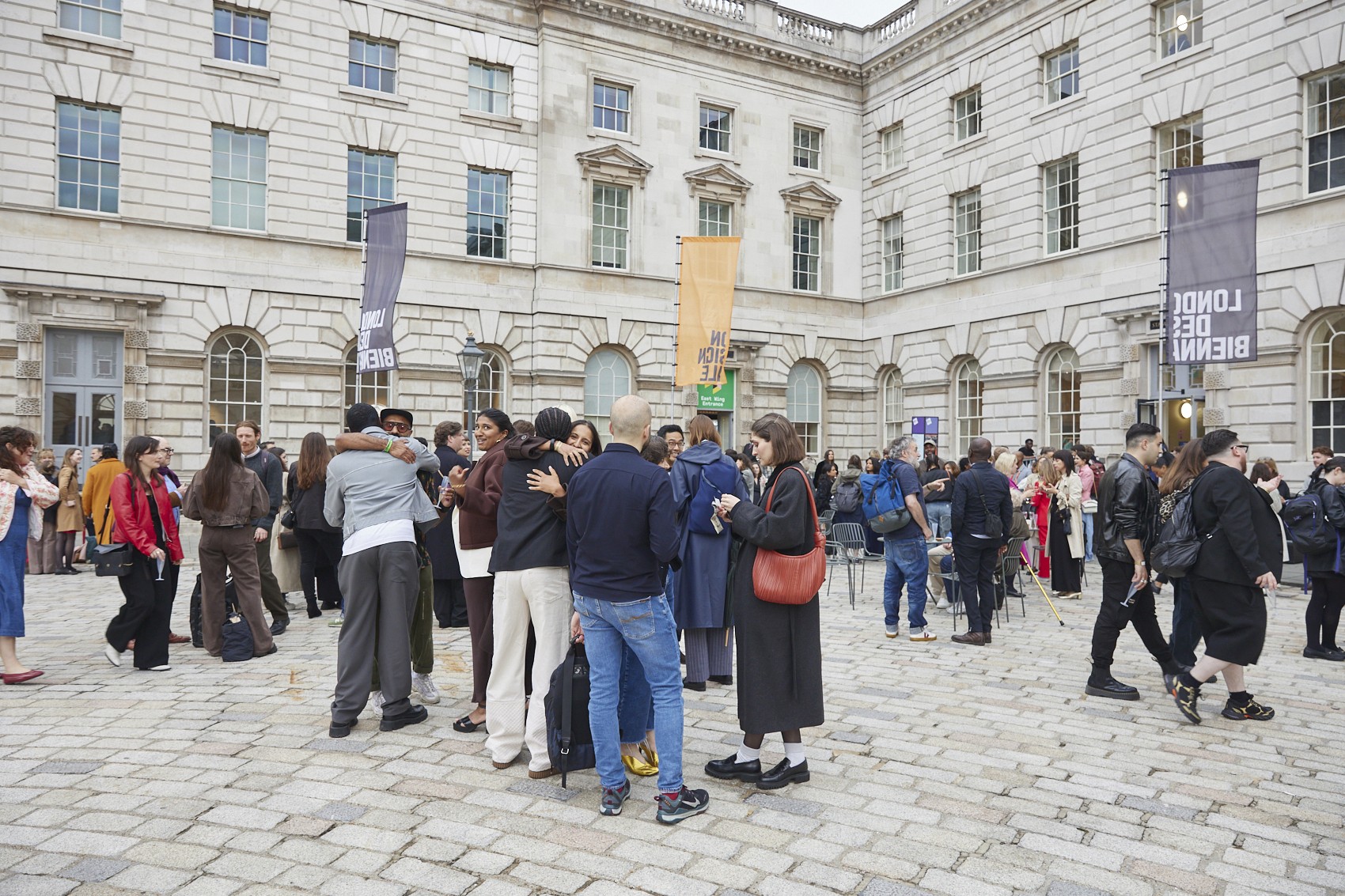
Updated August 2026Building
Mbari Memorial — Frieze week buildThe Shoreditch solo show opens 12 October at Art Otel, a continuation of the Tomorrows/Today-winning installation. Casting, AR overlay and the programme with Jumbi are all still moving.
Installation / AR
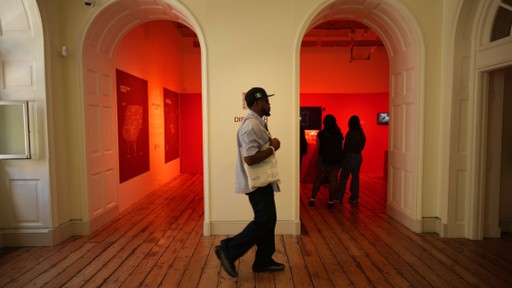
Updated August 2026Scanning
Open scan archiveRebuilding the download layer so every object ships with its provenance attached rather than as a separate file.
Web / Archive
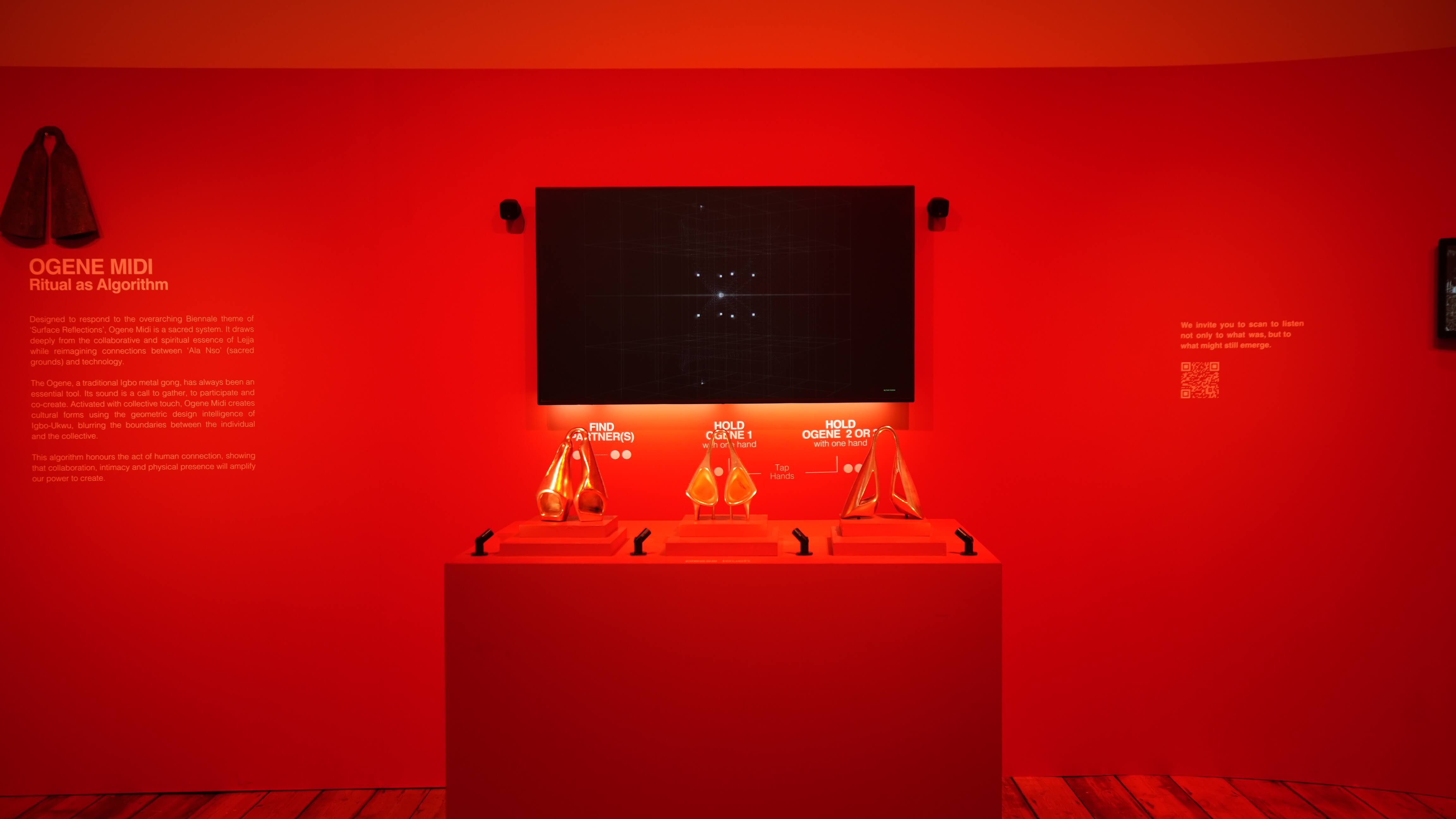
Updated July 2026Thinking
Ogene MIDI — after the Honorary MentionWhere the ritual-as-algorithm work goes next, following the London Design Biennale showing.
Sound / Sculpture
Notes to self
[ 3 ]In Progress3
One of the life lessons I’ve learnt over the last 3 months with the passing of my father and loss of my main job is that God will not put challenges in front of you that you are not ready to overcome. I’m so grateful for the opportunity I have to create and would not give this up for the world.
- Mbari Memorial — Frieze week buildcurrent working
- Open scan archivein progress
- Ogene MIDI — after the Honorary Mentioncurrent thinking, haven’t started yet